AI + SaaS: How Intelligent Automation Will Transform Businesses in 2026
Discover how AI-powered SaaS and intelligent automation will reshape business operations, boost efficiency, and drive scalable growth in 2026 and beyond.
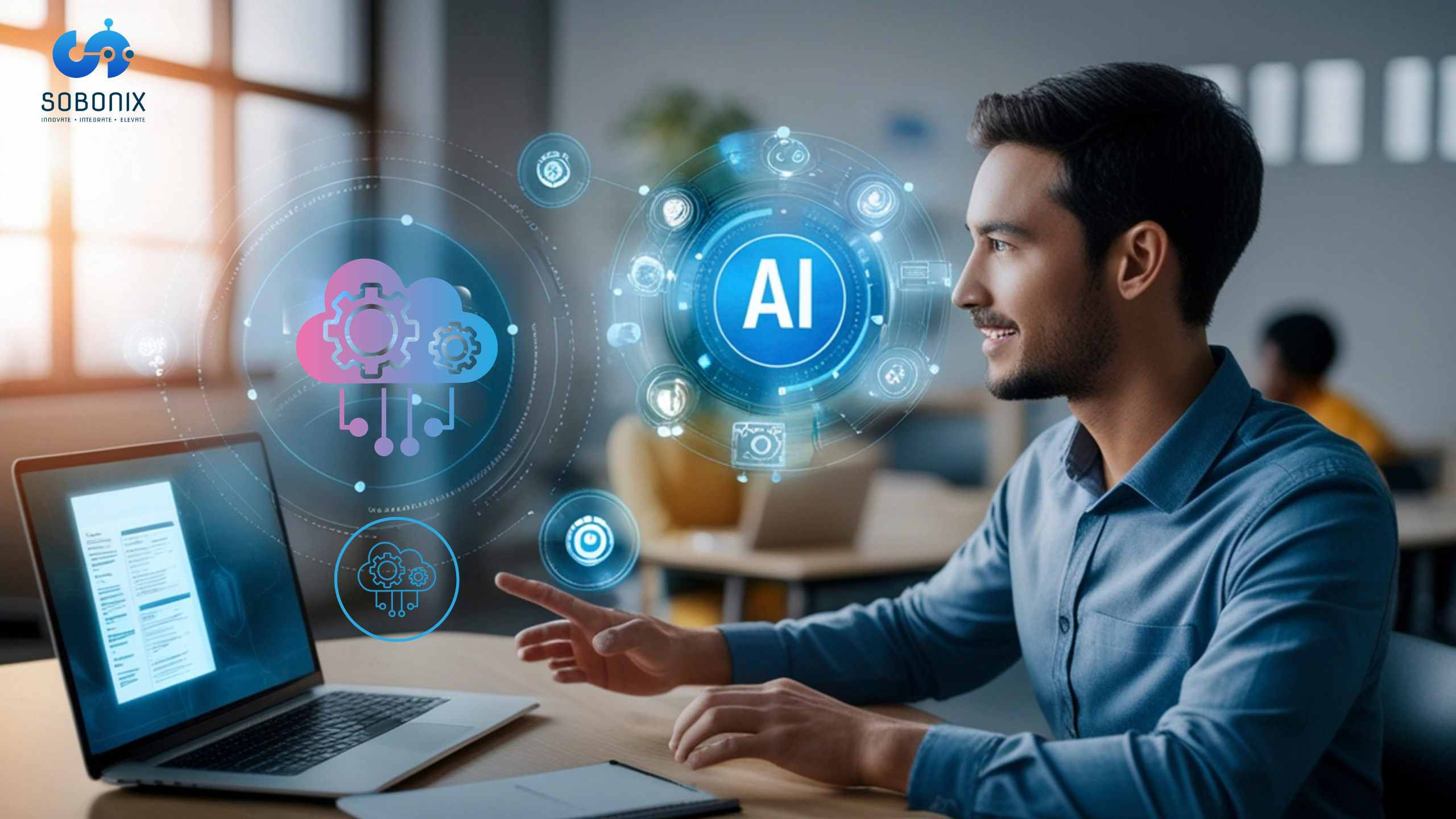
By 2026, over 70% of SaaS platforms are likely to integrate AI-driven automation capabilities. This is going to change the way businesses operate and compete. As organizations move towards efficiency-driven digital transformation, the integration of artificial intelligence and SaaS is no longer a research area; it is becoming a foundation.
At Sobonix, we witness this change while developing the next-generation SaaS platforms using intelligent systems. When combined with custom web design and development services and enterprise-level engineering, AI-driven SaaS platforms provide unparalleled automation, intelligence, and adaptability. For startups and enterprises, this change is revolutionizing digital operations.
Why AI and SaaS Are Converging in 2026
SaaS platforms have traditionally focused on accessibility and scalability. However, as data volumes grow and workflows become more complex, static systems are no longer sufficient. Artificial intelligence introduces dynamic decision-making, predictive analysis, and autonomous execution into SaaS environments.
This convergence allows businesses to:
- Automate repetitive processes
- Deliver personalized user experiences
- Improve operational accuracy
- Reduce manual dependency
As a result, AI-driven SaaS platforms are becoming essential for sustainable growth.
Intelligent Automation: The Core of AI-Driven SaaS
Intelligent automation goes beyond basic task automation. It combines machine learning, data analytics, and system integration to enable SaaS platforms to adapt in real time.
Key capabilities include:
- Workflow orchestration across systems
- Predictive process optimization
- Context-aware decision support
- Self-learning system behavior
At Sobonix, intelligent automation is embedded directly into SaaS architecture rather than layered as an add-on.
How AI Is Transforming SaaS Product Development
Smarter Product Architecture
The new SaaS product development paradigm starts with AI readiness. Data pipelines, model integration layers, and scalable infrastructure are built with AI readiness in mind.
A good ai development company will ensure that AI modules are seamlessly integrated with the core SaaS functionality without compromising performance and security.
Personalized User Experiences at Scale
AI-powered SaaS platforms transform raw data into actionable insights. Predictive analytics, anomaly detection, and real-time reporting allow businesses to make informed decisions faster.
This shift turns SaaS platforms into strategic intelligence tools rather than operational utilities.
Data-Driven Decision Intelligence
AI-powered SaaS platforms transform raw data into actionable insights. Predictive analytics, anomaly detection, and real-time reporting allow businesses to make informed decisions faster.
This shift turns SaaS platforms into strategic intelligence tools rather than operational utilities.
Autonomous Operations and Reduced Manual Effort
By embedding AI agents and automation logic, SaaS platforms can execute tasks independently, such as:
- Process approvals
- Resource allocation
- Performance optimization
This significantly reduces operational overhead while improving consistency.
Why Businesses Need a Specialized AI + SaaS Partner
Implementing AI within SaaS requires expertise across system design, data engineering, and product scalability. Generic development approaches often lead to fragmented implementations and limited ROI.
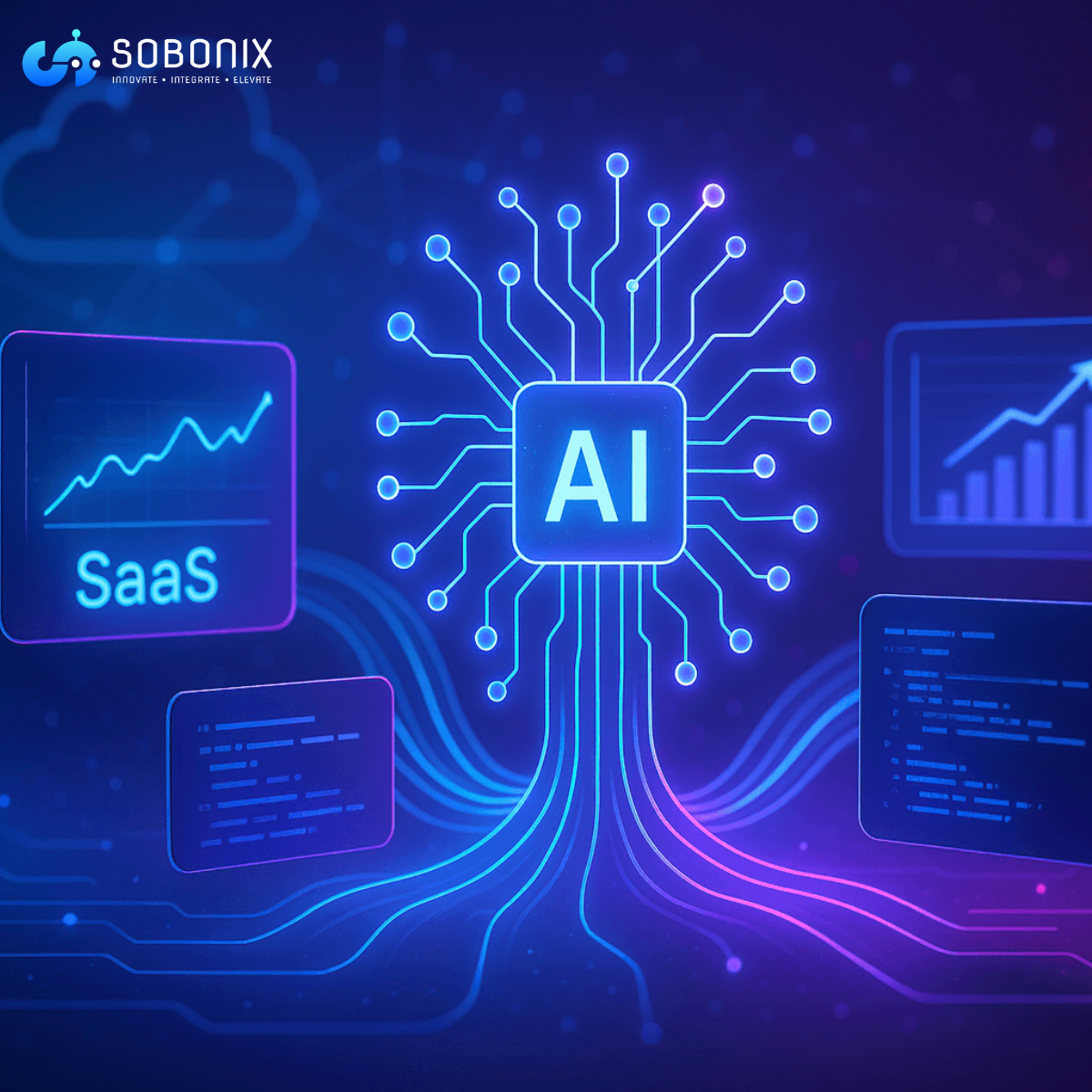
A specialized custom web application development company ensures:
- AI-ready architecture
- Secure data governance
- Scalable automation frameworks
- Continuous optimization
Sobonix brings these capabilities together to deliver integrated AI-powered SaaS solutions.
Also Read : End-to-End Guide to SaaS & AI Software Development for Businesses in India
Sobonix’s Approach to AI-Enabled SaaS Development
Sobonix operates at the intersection of AI engineering and SaaS product development. Our approach focuses on building platforms that evolve intelligently over time.
We emphasize:
- AI-integrated SaaS architecture
- Scalable cloud-native infrastructure
- Secure system orchestration
- User-focused product design
By aligning intelligent automation with business goals, Sobonix helps organizations future-proof their SaaS investments.
Industry Use Cases of AI-Powered SaaS in 2026
AI-enabled SaaS platforms are driving transformation across industries:
- Finance: Automated risk assessment and forecasting
- Healthcare: Predictive patient management systems
- Retail: Personalized demand forecasting and pricing
- Enterprise Operations: Intelligent workflow automation
These use cases highlight how AI and SaaS together deliver measurable business impact.
Final Outlook
In 2026, the integration of AI and SaaS is revolutionizing the way businesses function. Intelligent automation has become a necessity, not a competitive edge. Businesses that use AI-powered SaaS solutions will experience efficiency, intelligence, and agility.
With Sobonix, businesses can develop AI-driven SaaS solutions that not only scale but also adapt to the changing demands of the market and technological evolution.
FAQs
What is AI-powered SaaS?
AI-powered SaaS refers to cloud-based software platforms that integrate artificial intelligence to automate processes, analyze data, and support decision-making.
How does intelligent automation benefit SaaS platforms?
It improves efficiency, reduces manual effort, enhances accuracy, and enables scalable personalization.
Is AI integration suitable for all SaaS products?
While not all SaaS platforms require advanced AI, most benefit from intelligent automation in analytics, workflows, or user engagement.
Why choose Sobonix for AI-driven SaaS development?
Sobonix combines AI expertise, SaaS architecture, and custom web design to deliver scalable, intelligent platforms.
How does AI impact SaaS scalability?
AI optimizes resource usage, predicts demand, and automates operations, making SaaS platforms more resilient and scalable.