How AI Is Transforming Healthcare: Use Cases, Challenges & Solutions
AI is revolutionizing healthcare with smarter diagnostics, automation, and personalized treatment—while addressing critical challenges and innovation gaps.
Artificial Intelligence (AI) is no longer just a futuristic concept. It has become a powerful force reshaping modern healthcare. From early disease detection to personalized treatment plans, AI in healthcare is unlocking new possibilities for hospitals, clinics, researchers, and even patients. And as medical data grows exponentially, AI-driven technologies are becoming essential in improving accuracy, reducing workload, and enhancing patient care.
But like any major technological shift, healthcare AI also comes with challenges such as data privacy, ethical risks, and implementation hurdles. That’s why understanding the use cases, challenges, and AI healthcare solutions is crucial for organizations planning to adopt these systems.
Let’s explore how AI is transforming the healthcare industry and what the future holds.
Why AI Matters in Healthcare Today
As healthcare systems worldwide struggle with increasing patient volume, rising operational costs, and workforce shortages, AI offers a practical path forward. In fact, AI-powered medical systems help:
- Automate repetitive clinical tasks
- Reduce diagnostic errors
- Improve patient outcomes
- Accelerate research and drug discovery
- Enable remote and virtual care
However, the real power of AI lies in how it blends medical expertise with machine intelligence—allowing healthcare providers to deliver faster, more accurate, and more personalized care.
Top Use Cases of AI in Healthcare
While AI applications in healthcare continue to grow, several use cases stand out for their real-world impact.
AI-Powered Diagnostics & Imaging
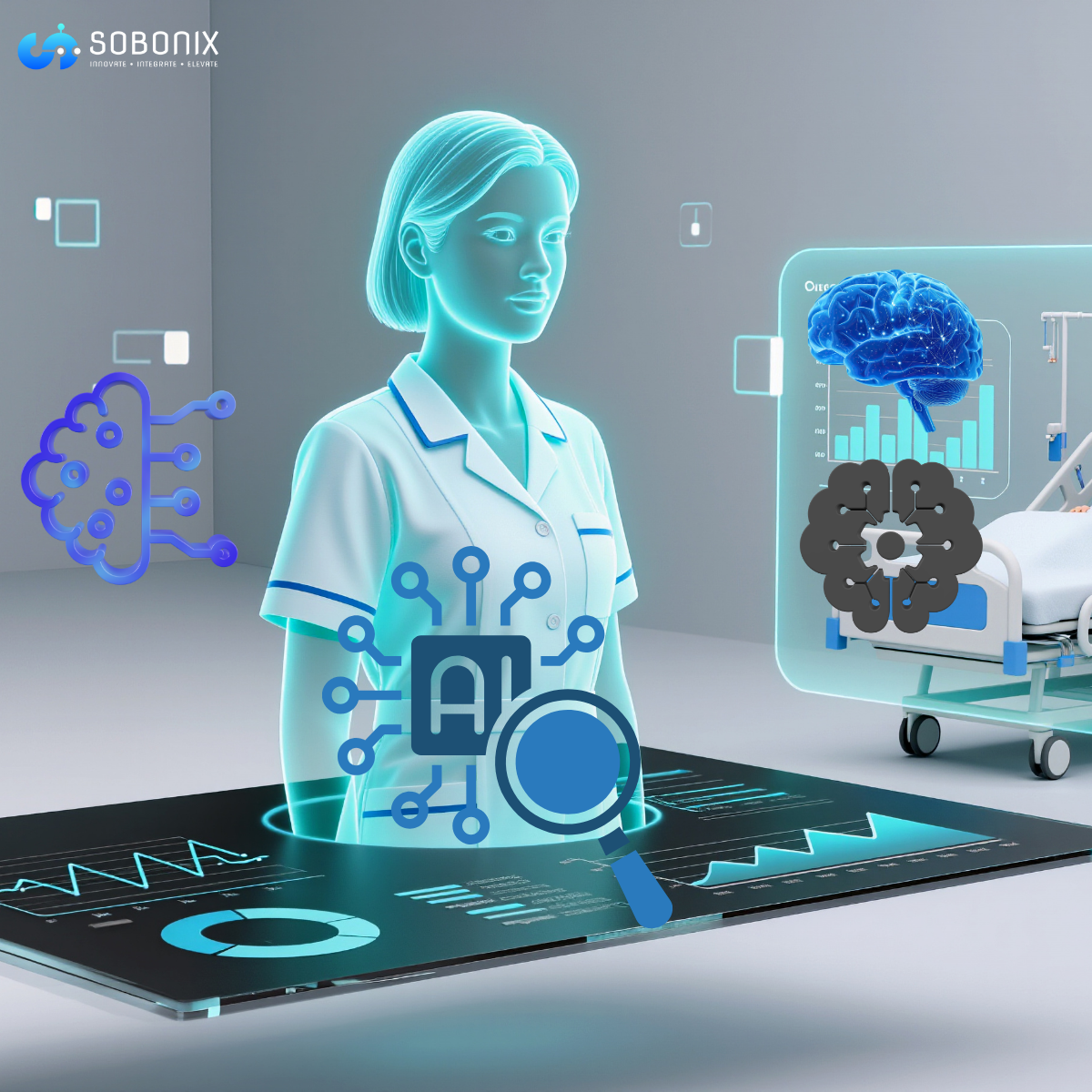
One of the most transformative applications is medical imaging analysis. AI tools can detect anomalies such as tumors, fractures, or infections faster than traditional methods.
AI in Healthcare
Examples include:
- Predicting heart attacks and strokes
- Identifying patients at risk of sepsis
- Forecasting hospital readmissions
- Monitoring chronic disease progression
Because AI continuously learns from millions of medical images, it can spot subtle patterns that even seasoned radiologists may miss.
Predictive Analytics for Disease Prevention
Another major breakthrough is predictive analytics. Healthcare providers can now use AI models to forecast patient risks long before a condition becomes severe.
Applications include:
- Predicting heart attacks and strokes
- Identifying patients at risk of sepsis
- Forecasting hospital readmissions
- Monitoring chronic disease progression
By analyzing patient history, lifestyle factors, genetics, and real-time data, AI makes healthcare more proactive rather than reactive.
Personalized Treatment Plans
AI in healthcare is also driving personalized medicine—treatments tailored to an individual’s genetic makeup, environment, and lifestyle.
Use cases:
- Customized cancer therapies
- AI-guided medication dosage
- Personalized nutrition and wellness programs
By connecting pharmaceutical data with patient profiles, AI-powered systems help clinicians select the best treatment with the highest success rate.
AI in Drug Discovery and Research
Developing new drugs typically takes 10–15 years, but AI accelerates the process significantly.

AI supports:
- Molecular structure prediction
- Virtual drug trials
- Identifying new drug combinations
- Real-time research analytics
Because AI drastically reduces the time and cost of research, pharmaceutical companies are rapidly adopting AI healthcare solutions.
Healthcare Automation & Administrative Efficiency
While clinical use cases get most of the attention, AI-driven automation also helps hospitals optimize operations.
Examples include:
- Automated billing & coding
- AI-enabled workflows for scheduling
- Claims processing
- Inventory & supply chain management
These advancements free up staff time so they can focus more on patient care rather than paperwork.
Virtual Health Assistants & Conversational AI
AI-powered healthcare chatbots and virtual assistants offer 24/7 support for:
- Symptom checking
- Appointment booking
- Chronic disease monitoring
- Mental health assistance
These digital tools improve patient engagement while reducing the burden on healthcare professionals.
Key Challenges of AI in Healthcare
Although the benefits are enormous, adopting AI comes with its own set of challenges—and addressing them is essential for successful implementation.
Data Privacy & Security Concerns
Healthcare involves sensitive patient data, which requires strict protection.
Without solid data governance, healthcare AI projects may face serious risks.
Biased or Incomplete Medical Data
AI models are only as good as the data they learn from.
Biased data can lead to:
- Misdiagnosis
- Harmful treatment recommendations
- Inefficiencies in clinical decision-making
Ensuring high-quality, diverse datasets is essential.
Integration with Existing Hospital Systems
Most hospitals use outdated or incompatible technologies.
Thus, integrating AI with:
- EHR systems
- Medical equipment
- Legacy databases
Ethical and Regulatory Concerns
AI decisions must be transparent, fair, and explainable.
Common concerns include:
- Who is responsible if AI gives a wrong diagnosis?
- Should AI be allowed to make critical medical decisions?
- How much automation is too much in healthcare?
Government regulations are still evolving, which adds complexity.
Solutions to Overcome AI Healthcare Challenges
To ensure the safe, effective use of AI in healthcare, organizations need clear strategies.
Here are some vital solutions:
Adopt Strong Data Governance & Compliance Frameworks
Hospitals must implement:
- Data encryption
- Secure cloud systems
- Role-based access
- HIPAA/GDPR-compliant processes
This ensures patients’ data is protected at all times.
Use Transparent & Explainable AI Models
Explainable AI (XAI) helps doctors understand how decisions are made.
This improves trust, accuracy, and accountability.
Invest in High-Quality, Diverse Medical Datasets
Healthcare AI solutions should be trained on datasets that represent:
- Multiple age groups
- Ethnicities
- Conditions
- Geographic profiles
This eliminates bias and delivers fair outcomes.
Collaborate with a Trusted AI Healthcare Development Company
Partnering with an experienced AI healthcare software development company like Sobonix helps ensure:
- Seamless integration
- Scalable architecture
- Regulatory compliance
- Secure cloud infrastructure
- Continuous maintenance
This reduces the complexity of implementing AI and accelerates digital transformation.
The Future of AI in Healthcare
Looking ahead, AI will play an even bigger role in:
- Robotic surgeries
- Genome sequencing
- Real-time remote diagnostics
- Fully automated hospitals
- Intelligent medical devices
- AI-powered wearables
As technology continues to advance, the entire healthcare ecosystem will move toward faster, safer, and more personalized care.
Conclusion
AI is reshaping healthcare in ways we’ve never seen before—bringing smarter diagnostics, predictive analytics, efficient workflows, and personalized care to the forefront. While challenges exist, strategic planning, strong governance, and the right technology partners can help healthcare organizations adopt AI confidently.
Whether you’re a hospital, clinic, or healthcare startup, now is the time to embrace AI healthcare solutions and build a smarter, data-driven future.
FAQs
1. How can AI improve my hospital or clinic?
AI can automate manual tasks, improve diagnosis accuracy, reduce costs, and enhance patient experience. From appointment management to AI-driven treatment planning, it makes healthcare faster, safer, and more efficient.
2. Is AI safe to use in clinical decision-making?
Yes—when built properly. AI provides decision support, not replacement. Using explainable AI models ensures that doctors understand every AI recommendation, reducing the risk of errors.
3. How much does AI healthcare software development cost?
Costs vary based on features, data requirements, and integrations. On average, AI healthcare solutions range between $25,000 to $250,000+. Sobonix offers cost-effective packages tailored to hospitals, clinics, and healthcare startups.
4. How long does it take to implement an AI solution in healthcare?
It usually takes 3–8 months, depending on the complexity—such as integrations, compliance requirements, and dataset preparation.
5. Does AI replace doctors or medical staff?
No. AI supports healthcare professionals by reducing workload, analyzing data quickly, and providing insights. It enhances decision-making but does not replace human expertise.
6. Why should I choose Sobonix for healthcare AI development?
Sobonix offers:
Deep expertise in AI & healthcare compliance.
Custom EHR integrations.
HIPAA/GDPR-ready solutions.
Cloud-native & scalable architectures.
24/7 support.
- Deep expertise in AI & healthcare compliance
- Custom EHR integrations
- HIPAA/GDPR-ready solutions
- Cloud-native & scalable architectures
- 24/7 support