
Why the Future Engineering Stack Will Be AI-Driven
Discover why the future engineering stack will be AI-driven, enabling smarter coding, automation, faster delivery, and self-improving systems.
The share of software engineering processes involving artificial intelligence (AI) will be more than 70% by 2026, transforming software development, design, deployment, and maintenance entirely. The conventional engineering stack based on static frameworks, manual programming, and deterministic systems is becoming obsolete and being replaced by an AI-oriented stack with intelligence present in all its layers.
We at Sobonix, a SaaS & AI software development company, are working on building innovative solutions for developing applications using the power of AI. The move from the traditional engineering stack to an AI-based stack is not evolutionary but revolutionary. Future engineering stacks need not be concerned only with coding, as they should be self-improving, intelligent, and built to drive smarter digital transformation.
Understanding the Shift: From Static Systems to Intelligent Architectures
The traditional stack architecture for software engineering relies on deterministic logic that dictates exact execution of commands as programmed. Yet, with the increasing complexity and volume of information within applications, deterministic systems cannot scale and adapt.
- AI-enabled engineering incorporates:
- Probabilistic modeling over deterministic logic
- Continuous learning over static implementation
- Contextual decision-making over predefined processes
In this way, engineering stacks are becoming smart entities that can think, predict, and automate decisions on their own.
Core Components of an AI-Driven Engineering Stack
Unlike other technological systems, an AI stack is more than a single innovation. The following elements can be identified in an AI stack:
1. Data Layer and Pipelines
For AI to be efficient, data is the key component. The engineering stack requires the following to function effectively:
Real-time data ingestion pipelines
Distributed storage infrastructure
Feature engineering platforms
2. Model Layer (ML and LLM Integration)
The next component is the model layer, comprising:
Machine learning algorithms for forecasting and classification purposes
Large language models (LLMs) for reasoning
Reinforcement learning models for adaptive and dynamic decision making
Here, data is converted to knowledge.
3. Orchestration and Middleware
For an effective integration of AI, orchestration frameworks will play an important role. These include:
Model serving with APIs
Workflow orchestrators
Microservices triggered by events
4. Application Layer (AI-augmented Frontend and Backend)
Modern web application development is characterized by both the backend and frontend systems being integrated using AI. For example:
Smart interfaces
AI-augmented conversational interfaces
Predictive UX design
In such applications, there is intelligence at play when interacting with a user.
5. MLOps (and Continuous Learning)
As discussed above, an AI stack must involve continuous monitoring and training processes. This includes:
Versioning and retraining ML models
Model performance monitoring
Continuous deployment pipeline
Key Drivers Behind AI-Driven Engineering Stacks
Increasing Data Complexity
Modern applications generate massive volumes of structured and unstructured data. Traditional systems cannot process this efficiently, whereas AI models can extract insights and patterns at scale.
Demand for Automation
Businesses require automation across workflows—from development to deployment. AI enables:
- Automated code generation
- Intelligent testing and debugging
- Workflow optimization
Need for Real-Time Decision Making
AI-driven systems can process data in real time, enabling:
- Predictive analytics
- Dynamic resource allocation
- Instant anomaly detection
Competitive Pressure
Organizations adopting AI-driven engineering gain a significant competitive advantage, driving innovation and reducing time-to-market.
How AI Is Transforming the Software Development Lifecycle
1. Code Generation and Development
AI tools can now generate boilerplate code, suggest optimizations, and even build entire modules. This accelerates development cycles and reduces manual effort.
2. Testing and Quality Assurance
AI-driven testing frameworks can:
- Identify bugs automatically
- Predict potential failures
- Optimize test coverage
3. Deployment and DevOps
AI enhances DevOps through:
- Predictive infrastructure scaling
- Automated CI/CD pipelines
- Intelligent monitoring and alerting
4. Maintenance and Optimization
AI continuously analyzes system performance, suggesting improvements and preventing downtime.
Benefits of an AI-Driven Engineering Stack
- Enhanced Productivity: Developers focus on high-value tasks while AI handles repetitive processes.
- Scalability: Systems adapt to increasing workloads without manual intervention.
- Improved Accuracy: AI reduces human error in coding, testing, and deployment.
- Faster Time-to-Market: Automated workflows accelerate product delivery.
- Continuous Optimization: Systems evolve based on real-time data and feedback.
At Sobonix, these benefits are central to how we design and deliver AI development solutions for modern enterprises.
Challenges in Transitioning to AI-Driven Stacks
Despite its advantages, adopting an AI-driven engineering stack comes with challenges:
- Data readiness and quality issues
- Integration with legacy systems
- High computational requirements
- Skill gaps in AI and ML expertise
- Security and compliance concerns
This is why many organizations partner with experienced AI consulting companies in India to navigate these complexities effectively.
The Role of AI Development Companies in This Transition
Making the shift to an AI-based engineering platform needs a lot of expertise in systems architecture, data engineering, and integrating AI models. An AI development firm that has vast experience in the field can make a huge difference as it will be responsible for:
- Designing scalable AI architectures
- Creating unique AI models
- AI integration within current software ecosystems
- Maintaining security and performance
Sobonix combines expertise in both engineering and AI.
Future Trends in AI-Driven Engineering
Looking ahead, several trends will shape the future of engineering stacks:
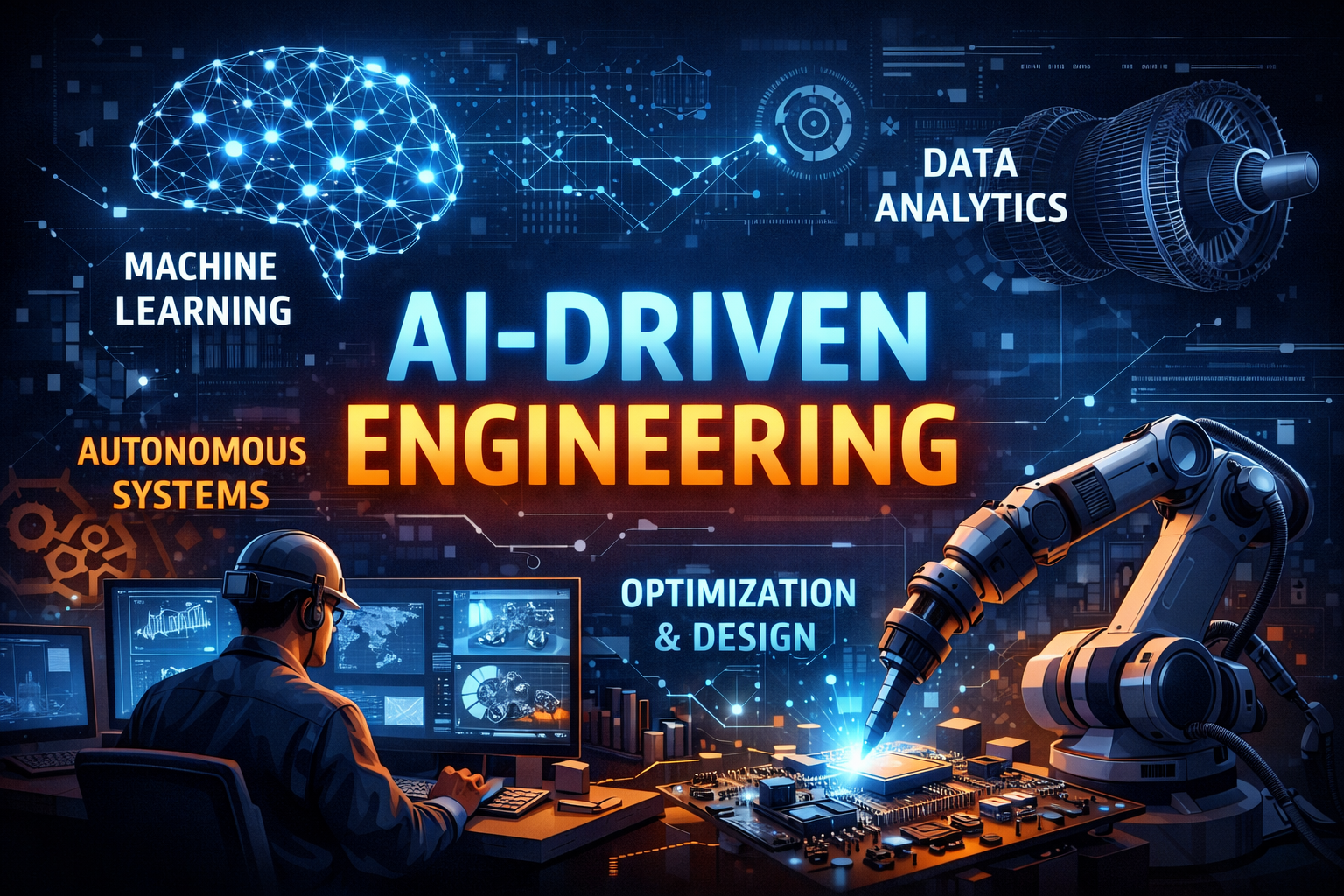
- Autonomous Software Development: AI systems capable of building and optimizing applications with minimal human input
- Multimodal AI Integration: Combining text, image, and voice processing within a unified system
- Edge AI Deployment: Bringing intelligence closer to data sources for low-latency processing
- AI-Native Architectures: Systems designed with AI as a core component rather than an add-on
These trends indicate that AI will become deeply embedded in every aspect of software engineering.
Final Thoughts
The future of software engineering lies unequivocally in the realm of artificial intelligence. With the increasing complexity and data volumes involved, conventional software engineering methods are simply not enough. The implementation of AI brings intelligence, flexibility, and automation to every aspect of software engineering, revolutionizing the entire process.
Through the integration of AI-based solutions and working with industry leaders such as Sobonix, organizations can ensure that they remain ahead of the curve by safeguarding their technological ecosystem for the future.
FAQs
What is an AI-driven engineering stack?
An AI-driven engineering stack integrates machine learning models, data pipelines, and automation tools into the software development lifecycle, enabling intelligent and adaptive systems.
How do AI development solutions improve engineering workflows?
They automate repetitive tasks, enhance decision-making, optimize performance, and enable continuous system improvement.
Is it necessary to replace existing systems to adopt AI?
No. AI can be integrated into existing systems through APIs and microservices, allowing gradual adoption.
Why partner with AI consulting companies in India?
They offer expertise, cost efficiency, and scalable resources, making them ideal for implementing enterprise-grade AI solutions.
How does Sobonix support AI-driven engineering?
Sobonix delivers end-to-end AI development solutions, from architecture design to deployment and optimization, ensuring scalable and secure implementation.


