
AI-Native Startups: Building Companies Around Autonomous Development
AI-native startups are reshaping business with autonomous development, AI agents, faster product launches, and scalable innovation.
According to estimates, by 2026, almost 65% of new tech startups will have a native AI architecture, which means that they will be created on the basis of AI technology as the basic platform, rather than merely integrating it into the company’s operation. This is not only about embracing innovation; it is about creating a fundamentally different structure for the company.
Rather than simply utilizing AI products, AI-native startups are organized on the principle of autonomous development systems, where intelligent agents, LLMs, and automated pipelines take part in decision making and development processes.
At Sobonix, we are working with new ventures and enterprises implementing AI development and custom web application development services to create AI-native platforms capable of scaling fast and minimizing operational costs.
What Are AI-Native Startups?
AI-native startups are those startups where the technology of artificial intelligence is used as part of the entire technological stack, from development through product use to analytics. Unlike the majority of traditional startups using artificial intelligence technologies later after their creation, AI-native startups consider the use of AI as a part of the system.

Main features:
AI-first design: Systems developed with AI in mind
Data-first operations: Continuous data input, processing, and analysis
AI-informed decisions: AI-based decisions affecting the products and processes
Machine learning-based scalability: Improvement of the system through constant usage and accumulation of more data
Understanding Autonomous Development
Autonomous development means utilizing AI technologies like LLMs, AI agents, and automation tools to create, test, and optimize software applications without much human involvement.
Rather than relying only on human software engineers, AI-first companies can leverage:
- Code generation systems for quick development
- AI agents for orchestrating the execution process
- Continuous integration and delivery pipelines with AI capabilities
- Systems that continuously optimize themselves based on performance data
- Such an approach allows for much faster development cycles and product iterations.
Core Components of AI-Native Architecture
1. Large Language Models (LLMs)
LLMs can be considered the reasoner component of AI-native applications. LLMs drive interactions, code generation, analysis of large amounts of data, and decision-making.
2. AI Agents and Orchestration Layer
AI agents can be described as self-sufficient entities designed to perform specific tasks and communicate with APIs. Orchestration tools manage the work of multiple AI agents to accomplish complicated goals.
3. Data Pipelines and Feedback Loops
Data pipelines are constantly sending information to AI models in real time. Through feedback loops, the system learns and adapts.
4. Cloud-Native Environment
The scalable environment provided by cloud infrastructure is used for training, deploying, and performing real-time inference.
5. API-Driven Architecture
In AI systems, the integration of AI with applications happens using APIs.
Benefits of Building AI-Native Startups
Faster Product Development
Independent development helps decrease time-to-market for products due to automatic coding, testing, and deployment. Artificial intelligence makes routine engineering operations easier and faster, which means that startup companies can test the idea and launch the product quickly.
Higher Operational Efficiency
Using artificial intelligence, routine operational processes can be automated. As a result, lean development teams can deliver greater output, completing more work and minimizing operational overhead.
Continuous Improvement
Products built by AI can improve and adapt to changing conditions continuously due to feedback from the latest data. There is no need to update the code because it learns by itself and develops new capabilities over time.
Easy Scalability
Thanks to cloud technologies, AI-based solutions scale easily to increase capacity when there is a rise in users. With the help of distributed computing, applications can operate at a high level while processing larger amounts of information without delays.
Competitive Edge
An advantage that startups gain from building AI-native solutions is the capability to innovate faster, make smarter decisions, and provide customers with a highly personalized experience.
Role of AI Development Companies in AI-Native Startups
Building an AI-native startup requires deep expertise in AI engineering, system architecture, and scalable infrastructure. This is where an experienced AI development company plays a critical role.

Companies like Sobonix provide:
- End-to-end AI development solutions
- Integration with existing SaaS, CRMs, and enterprise systems
- Custom model development and fine-tuning
- Scalable cloud deployment strategies
By partnering with experts, startups can focus on business growth while ensuring their AI systems are robust, secure, and future-ready.
Real-World Use Cases of AI-Native Startups
1. AI-Driven SaaS Platforms
Startups are building SaaS products where AI powers core functionalities such as analytics, automation, and personalization.
2. Autonomous Customer Support Systems
AI-native companies deploy intelligent assistants capable of handling complex customer queries and workflows.
3. AI-Powered Development Platforms
Platforms that use AI to generate code, test applications, and optimize performance in real time.
4. Intelligent Decision Systems
Startups leveraging AI for financial forecasting, supply chain optimization, and risk management.
Monetization Models for AI-Native Startups
AI-as-a-Service (AIaaS)
AI-as-a-Service helps startups bundle AI functions like natural language processing (NLP), predictive engine models, and automation software into API calls to provide these as a service for companies.
Subscription Intelligent SaaS Model
In the subscription-based intelligent SaaS, customers pay subscription fees to use AI-powered saas applications that continue learning and improving themselves. This is in contrast with normal SaaS since intelligent systems are adaptive and keep evolving with user behavior.
Usage-Based Pricing (API Calls/Tokens)
Users pay according to their actual use of a system, such as API calls, processing time, or tokens consumed. This type of pricing offers transparent pricing, where clients pay according to how much the system is being used, thus, it is quite scalable.
Outcome-Based Pricing
In this pricing model, clients pay for the results that the AI application generates. Customers are not charged according to usage but according to what kind of results the software delivers, such as better efficiency, more conversion, etc.
Challenges in Building AI-Native Startups
While the benefits are significant, AI-native development comes with challenges:
- Data dependency: High-quality data is essential for model accuracy
- Infrastructure complexity: Managing scalable AI systems requires advanced architecture
- Security and compliance: Protecting sensitive data is critical
- Model reliability: Ensuring consistent and unbiased outputs
Addressing these challenges requires a structured approach and collaboration with experienced partners.
Best Practices for Building AI-Native Startups
- Start with a Clear Use Case Define how AI will deliver measurable value to your product or service.
- Invest in Data Infrastructure Ensure data pipelines are reliable, scalable, and compliant.
- Adopt Modular Architecture Use microservices and APIs to enable flexibility and scalability.
- Focus on Continuous Learning Implement feedback loops to improve model performance over time.
- Partner with Experts Collaborate with an experienced AI development company like Sobonix for technical guidance and execution.
Future Outlook: Fully Autonomous Enterprises
The future of AI-native startups is moving toward a stage where businesses will operate as fully autonomous enterprises, where AI systems handle not just isolated tasks but entire operational layers. In this model, self-operating businesses will rely on interconnected AI agents that manage workflows, execute decisions, and continuously optimize performance with minimal human intervention. Instead of humans driving every process, AI systems will orchestrate operations end-to-end, from product development and marketing to customer engagement and financial forecasting.
A key shift will be the rise of AI-led decision ecosystems, where strategic decisions are supported or even initiated by intelligent systems analyzing real-time data streams. These ecosystems will integrate predictive analytics, behavioral modeling, and autonomous reasoning to recommend or execute actions faster than traditional decision-making structures. This will significantly reduce latency in business operations and improve accuracy in complex environments.
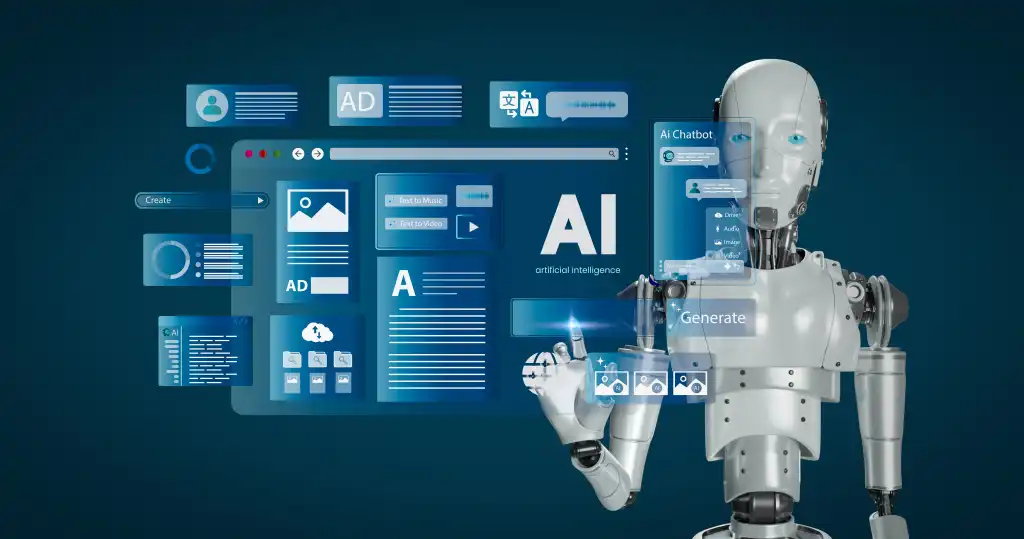
Another major evolution will be the emergence of autonomous SaaS platforms, where software products are no longer static tools but self-improving systems. These platforms will adapt dynamically to user behavior, optimize features automatically, and even generate new functionalities based on demand patterns. This will redefine how SaaS products are built, shifting from manual updates to continuous AI-driven evolution.
Despite this high level of automation, human-AI collaboration models will remain essential. Humans will focus on strategy, creativity, ethical oversight, and innovation direction, while AI handles execution, optimization, and scalability. This collaboration ensures that businesses remain both intelligent and aligned with human intent.
Overall, fully autonomous enterprises represent a future where organizations are not just supported by AI but are fundamentally powered by it, creating a continuous loop of learning, adaptation, and intelligent execution.
Future of AI-Native Startups
Looking ahead, AI-native startups will continue to evolve with advancements in:
- Multimodal AI systems (text, image, voice integration)
- Self-improving autonomous agents
- Real-time decision intelligence
- AI-driven business ecosystems
These developments will further blur the line between software and intelligence, making AI an integral part of business operations.
Final Thoughts
AI-native startups represent the next phase of digital innovation, where intelligence is embedded into every aspect of business operations. By leveraging autonomous development, startups can accelerate growth, improve efficiency, and deliver superior user experiences.
With the right strategy and a trusted partner like Sobonix, businesses can build AI-native systems that are not only scalable but also capable of evolving with technological advancements. In an increasingly competitive landscape, adopting AI-native architecture is not just an advantage—it is becoming a necessity.
FAQs
What is an AI-native startup?
An AI-native startup is a company built with AI as a core component of its architecture, enabling automation, intelligent decision-making, and scalable operations.
How does autonomous development work?
Autonomous development uses AI tools and agents to automate coding, testing, deployment, and optimization processes, reducing reliance on manual development.
Why are AI development solutions important for startups?
They provide the tools and expertise needed to build scalable, intelligent systems that align with business goals and deliver measurable ROI.
Can small startups adopt AI-native models?
Yes, with the right architecture and support from an AI development company, startups can implement AI-native systems efficiently.
Why choose Sobonix for AI-native development?
Sobonix combines AI expertise with custom web application development services, delivering scalable, secure, and future-ready AI solutions tailored to business needs.


