
Beyond LMS: Why Institutions Are Demanding Fully Custom, Curriculum-Specific EdTech Platforms
Discover how custom EdTech platforms help growing education technology businesses overcome LMS limitations, modernize learning, and scale.
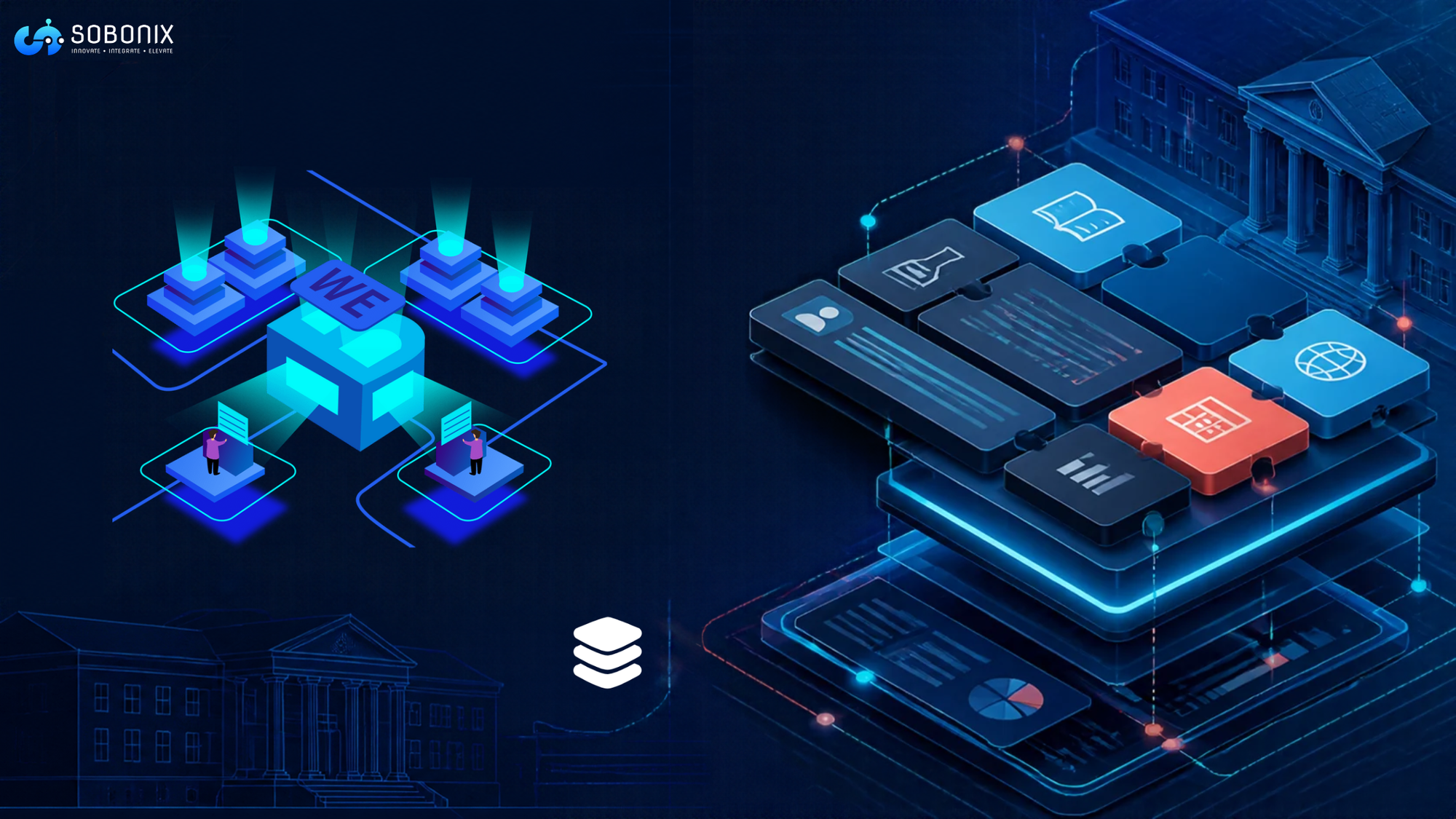
LMS is becoming a major part of the contemporary educational process. It helps institutions arrange their courses, load the relevant study materials, handle assignments, monitor student attendance and progress, among other functions. Yet, as more specialized requirements for the education process arise, it becomes clear that a standard LMS cannot cover all the peculiarities of educational activities at institutions.
First, a medical college has a different course curriculum than an engineering university. Second, a professional training institution will need competence-oriented assessment tools, while a school needs grade-specific curricula with constant monitoring of student performance. Even institutions that offer similar courses can have different approaches to teaching and evaluation.
All these factors result in a rising need for more flexible education technology. Instead of using general-purpose platforms, institutions explore EdTech options customized according to their curriculum, processes, and student requirements.
The increase in demand for custom EdTech solutions is also associated with the evolution of digital education expectations. According to the 2023 Global Education Monitoring Report by UNESCO, the number of students registered in MOOCs grew from zero in 2012 to at least 220 million in 2021. There is no doubt that digital education has developed, yet having technology does not
Why Traditional LMS Platforms Are No Longer Enough
Conventional LMS systems have been built around common educational tasks. These include course management, content delivery, submission of assignments, grading, and communication.
This functionality is adequate for organizations with basic educational needs. Challenges come up when the organization wants more control over their education process and curriculum.
For instance, an engineering university could be looking to ensure that its students go through practical labs before joining the advanced courses. A nurse training college could be in need of tracking clinical competence, conducting practical evaluations, and getting supervisor approvals. An LMS system may need extra features to handle this workload.
Some common limitations include:
- Limited control over curriculum structures
- Restricted customization of assessments
- Difficulty supporting specialized learning paths
- Limited integration with academic and administrative systems
- Dependence on third-party plugins
- Inflexible reporting and analytics
- Limited support for institution-specific teaching methods
The problem is not that LMS platforms lack useful features. It is that a common feature set cannot always support specialized academic requirements.

What Makes a Curriculum-Specific EdTech Platform Different?
A specialized EdTech platform in terms of a specific curriculum is based on the academic framework and the goals of the institute.
Development does not begin with a fixed feature set; instead, it starts with an understanding of the way courses are structured, the way learners advance through those courses, the assessment process, and finally, measuring academic performance.
As an example, an EdTech platform for health education might require linking theoretical sessions with simulations and practical exams.
In addition, a technical education platform might require coding, submission of projects, and automated evaluation.
These requirements influence the platform's architecture, user experience, and data structure
The main difference is flexibility. A custom platform can support the institution's existing academic model instead of requiring faculty and administrators to adjust their processes to fit the software.
Different Curriculums Require Different Learning Experiences
One of the strongest reasons institutions are investing in custom EdTech software is that educational programs are not interchangeable.
Each discipline has its own learning objectives, teaching methods, assessment requirements, and practical components.
A platform designed for general classroom learning may not adequately support specialized academic activities.
Consider the following examples:
A custom platform can connect these activities within one environment.
For example, an engineering student could access a course module, complete a coding assignment, submit a project, receive instructor feedback, and track skill development through the same platform.
This reduces the need to manage separate tools for different academic activities.
Personalized Learning Requires More Than Course Access
Most LMS platforms allow students to access learning materials at their own pace. However, personalized learning involves much more than letting students choose when to study.
It requires understanding individual progress, identifying knowledge gaps, recommending relevant content, and adjusting learning activities based on performance.
A custom EdTech platform can support these capabilities through configurable learning paths and analytics.
For example, if a student consistently struggles with a particular mathematics concept, the platform could recommend prerequisite lessons, additional practice questions, or supplementary learning resources.
Another student who demonstrates strong performance may be directed toward advanced exercises.
Artificial intelligence can make this process more responsive.
AI-powered features can help institutions:
- Analyze student performance patterns
- Recommend relevant learning resources
- Generate practice questions
- Provide feedback on selected activities
- Identify students who may need additional support
- Support conversational learning assistants
However, personalization should be aligned with the curriculum and reviewed by educators. AI recommendations should support teaching decisions rather than replace academic judgment.
What the Research Says
The CHLOE 9 report, published in 2024 by Quality Matters, Eduventures, and EDUCAUSE, surveyed 293 higher education institutions in the United States.
It found that only 9% of surveyed institutions used AI for adaptive or personalized student learning to a great or moderate extent. Meanwhile, 62% reported little or no use in this area.
This indicates an opportunity for institutions to explore more structured approaches to personalized learning rather than relying only on basic digital course delivery.
Custom Assessment Systems Support Better Academic Evaluation
Assessments are not the same across educational programs.
A school may evaluate students through regular examinations, classroom participation, and assignments. A medical institution may need practical examinations and clinical competency evaluations. An engineering program may assess coding skills, laboratory work, and final-year projects.
A standard LMS may support basic tests and grading, but specialized assessment workflows often require additional functionality.
Custom e-learning software development allows institutions to design assessment systems around their academic requirements.
These may include:
Competency-based assessments: Evaluate whether students have demonstrated specific skills or learning outcomes.
Practical evaluations: Allow instructors to assess laboratory work, simulations, presentations, or clinical activities.
Adaptive assessments: Adjust question difficulty based on student responses where pedagogically appropriate.
Project-based evaluation: Support submissions, instructor reviews, peer assessments, and progress tracking.
Automated grading: Evaluate objective questions, selected coding exercises, and other assessments with clearly defined criteria.
Institutions can also define their own grading systems, evaluation criteria, feedback formats, and approval workflows.
This makes assessments more closely connected to the actual curriculum.
Better Integration With Existing Academic Systems
An educational institution rarely operates through an LMS alone.
It may already use a Student Information System (SIS), fee management software, examination systems, library platforms, attendance applications, and communication tools.
When these applications operate independently, administrators and faculty often need to enter or retrieve the same information from multiple places.
A custom EdTech platform can bring these systems together through APIs and integration services.
For example, when a student enrolls in a program, the platform could retrieve relevant enrollment information from the SIS, assign the appropriate curriculum, provide access to learning materials, and update academic progress as the student completes modules.
The integration approach should preserve data consistency and apply appropriate access permissions.
Standards such as Learning Tools Interoperability (LTI) and the Experience API (xAPI) can also help connect educational tools and exchange learning activity information, depending on the institution's requirements.
AI Is Expanding the Possibilities of Custom EdTech Platforms
AI is creating new opportunities for institutions to improve teaching support, student engagement, and academic administration.
However, its usefulness depends on how well it fits into the learning environment.
A generic AI chatbot may answer general questions, but a curriculum-aware learning assistant can retrieve information from approved course materials, explain concepts according to the syllabus, and guide students toward relevant lessons.
Custom AI development can support several educational use cases.
For example, a university could introduce a course-specific AI assistant that uses RAG (Retrieval-Augmented Generation) to retrieve information from its approved textbooks, lecture notes, and academic resources.
The assistant can provide contextual responses while directing students to the relevant learning material.
Institutions must still consider accuracy, academic integrity, student privacy, and educator oversight before deploying these capabilities.
Institutional Control, Security, and Data Ownership Matter
Educational platforms handle sensitive information, including student profiles, academic records, examination results, attendance, and sometimes financial details.
Institutions need to understand how this information is collected, stored, accessed, and shared.
With generic platforms, some customization and data management decisions may depend on the vendor's capabilities and policies.
Custom development gives institutions more control over architecture and security requirements, although this responsibility must be supported by proper engineering practices.
Important considerations include:
- Role-based access for students, faculty, and administrators
- Secure authentication and authorization
- Encryption of sensitive information
- Controlled access to academic records
- Data backup and recovery
- Audit logs for important actions
- Data retention and deletion policies
- Compliance with applicable data protection requirements
Multi-tenant architecture is another important consideration for education groups operating multiple schools, colleges, or campuses.
It can allow different institutions or departments to use a shared platform while maintaining appropriate separation of data, permissions, and configurations.
Custom Platforms Can Adapt as Academic Requirements Change
Curriculums are not static.
Institutions introduce new programs, revise course structures, update learning outcomes, change assessment methods, and adopt new academic policies.
A platform that cannot accommodate these changes may become difficult and expensive to maintain.
Custom EdTech software development allows institutions to build configurable systems that can evolve with their academic requirements.
For example, a university may initially need course management, assignments, and examinations. Later, it may introduce competency tracking, AI-assisted learning, digital certifications, and external training partnerships.
A modular architecture can help add these capabilities without rebuilding the entire application.
The platform can also support different user roles and academic structures across departments.
The objective is not to develop every possible feature from the beginning. It is to create a technical foundation that allows institutions to expand functionality as their needs change.
How to Build a Curriculum-Specific EdTech Platform
Building a custom platform requires more than converting academic requirements into software features.
The development process should involve educators, administrators, technology teams, and students to understand how the platform will be used.
A practical development approach includes the following stages.
Institutions should consider starting with a focused set of high-priority academic workflows rather than attempting to digitize every process in one phase.
A pilot involving one department or program can help validate the platform before a wider rollout.

Why Institutions Should Invest in Custom E-Learning Software Development
The decision to invest in custom software should be based on actual institutional requirements.
For some organizations, an existing LMS will provide everything they need. Others may benefit from additional integrations, configurable modules, or a fully custom platform.
Custom e-learning software development becomes particularly valuable when an institution needs specialized curriculum structures, unique assessment workflows, greater control over data, or deeper integration with its existing systems.
It can also support institutions that want to offer digital learning as a separate business or expand into professional certification, hybrid education, and specialized training programs.
The long-term value comes from building a platform that supports the institution's academic model rather than forcing that model into a predefined software structure.
Key Takeaways
- Traditional LMS platforms support common learning activities but may not address specialized academic workflows.
- Curriculum-specific platforms can accommodate different teaching methods, assessment structures, and learning outcomes.
- Personalized learning requires meaningful student data, configurable learning paths, and appropriate educator oversight.
- AI can support learning assistants, content recommendations, assessment feedback, and academic analytics.
- Integrations with SIS, examination, library, and attendance systems help create a connected academic environment.
- Security, data ownership, accessibility, and scalability should influence architecture decisions from the beginning.
- A phased development approach helps institutions validate their investment before expanding the platform.
Conclusion
Future technologies in education are not limited to putting courses online. Institutions require platforms that would correspond to their educational model, way of assessing students' performance and academic processes management, and learners' needs.
Classic LMS platforms still have an application when it comes to traditional education management. However, institutions with a unique curriculum and complex academic processes might benefit from a more advanced solution.
Development of custom edtech and online learning platforms makes it possible to create an academic platform based on certain needs, integrate existing academic processes, and implement new features, such as artificial intelligence for learning and assessment, for instance.
When considering future steps of digitalization of education at institutions, one has to consider that investment in current technologies, yet flexible enough to adapt to future changes.
FAQs
What is a curriculum-specific EdTech platform?
A curriculum-specific EdTech platform is a digital learning system designed around an institution's academic structure, teaching methods, assessments, and learning objectives. It can include custom course modules, competency tracking, practical evaluations, and personalized learning paths.
How is custom EdTech software different from a traditional LMS?
A traditional LMS provides standard features for managing courses, content, assignments, and student progress. Custom EdTech software can support specialized academic workflows, institution-specific assessments, integrations, and curriculum structures.
Can a custom EdTech platform integrate with an existing LMS?
Yes. A custom platform can integrate with an existing LMS through APIs and supported interoperability standards. Institutions can extend their current systems instead of replacing everything immediately.
How can AI improve a custom e-learning platform?
AI can support personalized content recommendations, conversational learning assistants, automated feedback, learning analytics, and administrative assistance. Its implementation should follow curriculum requirements and include appropriate educator oversight.
Is custom e-learning software development suitable for schools and universities?
Yes. Schools, colleges, universities, professional training institutes, and specialized education providers can benefit from custom platforms when their academic or operational requirements go beyond standard LMS capabilities.


