From Copilot to Autonomous Developers: The Evolution of AI Coding Tools
Explore the evolution from AI copilots to autonomous developers, transforming coding with automation, intelligence, and faster software development workflows
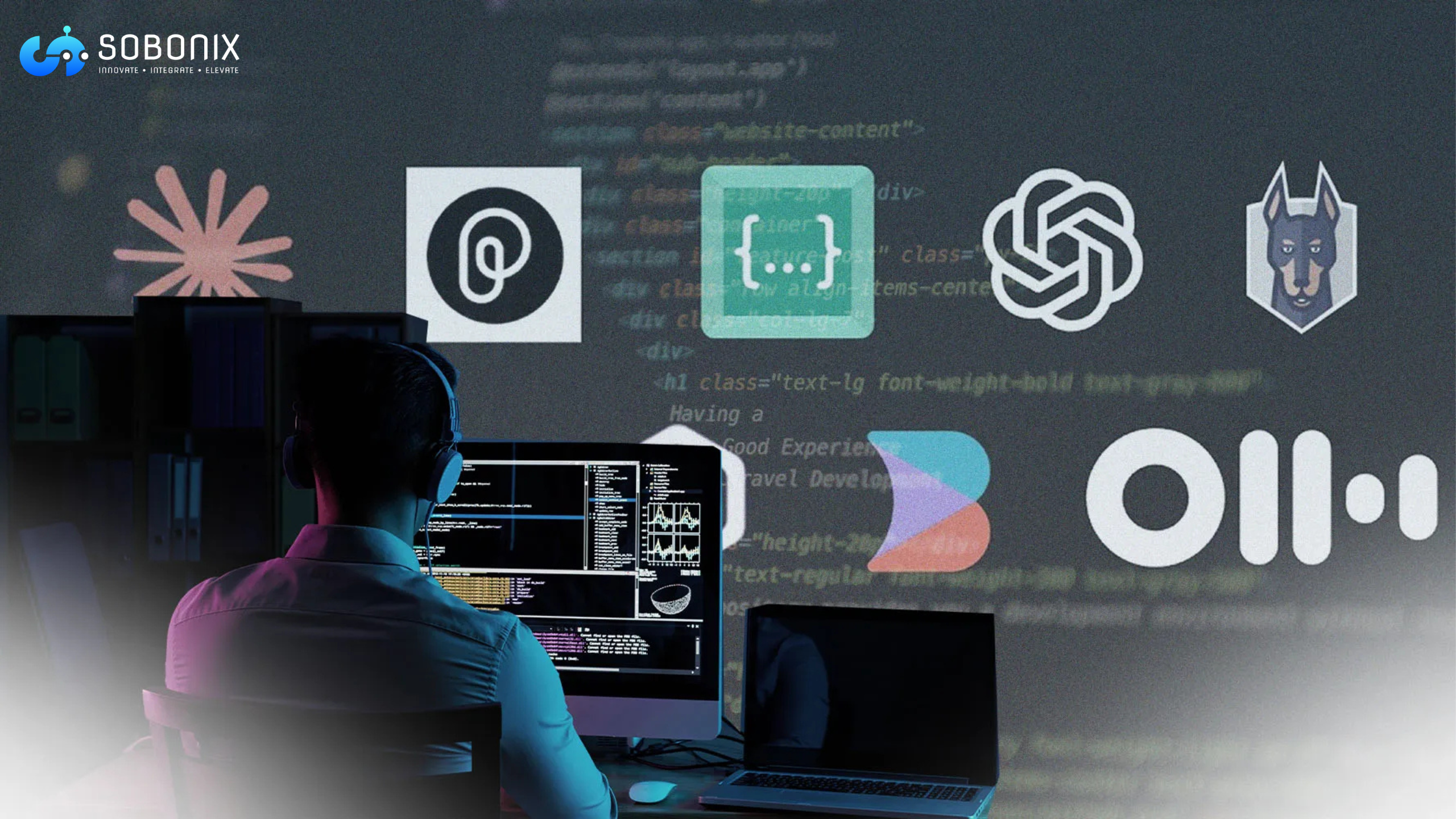
Artificial intelligence is changing the software development lifecycle dramatically. Recent data available in the industry states that more than 65% of developers use AI-powered coding tools to increase their productivity, reduce errors, and enhance their performance. From simple code suggestion tools, AI-powered tools have now reached a milestone where developers can use them to develop, debug, and even deploy software.
This is a milestone in the evolution of AI-powered software development tools. For businesses using custom web application development services, this is a critical piece of information to help them compete in 2026 and beyond.
The Early Stage: Rule-Based Code Assistance
Initially, coding tools were limited to syntax highlighting, autocomplete, and static code analysis. These systems relied on predefined rules and pattern matching rather than true intelligence.
While they improved developer efficiency to some extent, they lacked:
- Context awareness
- Semantic understanding of code
- Ability to generate complex logic
As software systems grew more complex, the need for intelligent assistance led to the emergence of AI-driven coding tools.
The Rise of AI Copilots
With AI copilots, there was a paradigm shift in software engineering, where tools using LLMs were providing context-aware code suggestions, function generation, etc.
What AI copilots do:
- They analyze code context in real-time
- They predict developers' intent
- They generate code snippets related to the intent
With AI copilots, businesses can reduce their software development time by automating various repetitive programming tasks, such as code generation, API integration, etc. AI development companies help businesses develop custom web application services using AI copilots.
Transition to AI Pair Programmers
With the advancement in AI models, coding tools have transformed into AI pair programmers instead of being just copilots. AI pair programmers are now capable of:
Proposing code improvements at the architecture level
- Detecting bugs and vulnerabilities
- Refactoring code for performance optimization
- Creating unit and integration tests
The development of AI pair programmers has been in response to the needs of the corporate world for AI development solutions that are scalable and require robust and flexible software.
Autonomous Development Systems: The Next Frontier
The latest stage in this evolution is the emergence of autonomous AI developers. These systems go beyond assistance and can independently execute large parts of the software development lifecycle.
Key Capabilities:
- End-to-End Code Generation: From requirements to deployment-ready applications
- Automated Debugging: Identifying and fixing errors without human intervention
- Continuous Integration & Deployment (CI/CD): Automating build, test, and deployment pipelines
- Self-Optimization: Improving performance based on real-time feedback
Autonomous systems leverage advanced LLMs, reinforcement learning, and orchestration frameworks to function as intelligent development agents.
For enterprises, this means reduced dependency on large development teams and faster time-to-market.
Core Technologies Driving AI Coding Evolution
The transformation from copilots to autonomous developers is powered by several advanced technologies:
1. Large Language Models (LLMs)
LLMs enable machines to understand and generate human-like code by learning from vast datasets.
2. Reinforcement Learning
Used to optimize model performance based on feedback and outcomes.
3. Code Embeddings and Vector Databases
Enable semantic understanding and retrieval of code snippets.
4. AI Orchestration Frameworks
Tools like agent-based systems allow multiple AI components to collaborate in development workflows.
5. Cloud-Native Infrastructure
Scalable computing resources ensure efficient model training and deployment.
These technologies form the backbone of modern AI development solutions used by enterprises and AI consulting companies in India.
Benefits of AI-Powered Coding Tools for Businesses
1. Increased Development Speed
AI tools automate repetitive coding tasks, reducing development time by up to 40–60%.
2. Improved Code Quality
Automated testing, debugging, and optimization ensure higher reliability and maintainability.
3. Cost Efficiency
Reduced reliance on large development teams lowers operational costs.
4. Faster Time-to-Market
Rapid prototyping and deployment enable businesses to launch products quicker.
5. Scalability
AI-driven systems can handle increasing complexity and scale with business needs.
For organizations leveraging custom web application development services, these benefits translate into higher productivity and better ROI.
Challenges in Adopting Autonomous AI Development
Despite its advantages, autonomous AI development presents several challenges:
Benefits of AI-Powered Coding Tools for Businesses
1. Increased Development Speed
With AI-powered tools, businesses can reduce their coding time by up to 40-60%.
2. Improved Code Quality
With AI tools, there is improved code quality, which is possible through testing, debugging, and optimization.
3. Cost Efficiency
With AI tools, there is reduced need to have a larger team of developers, thus making businesses more cost-efficient.
4. Faster Time-to-Market
With AI tools, businesses can develop their products faster, thus enabling them to have a faster time-to-market.
5. Scalability
With AI tools, businesses can develop scalable solutions, thus enabling them to grow with their needs.
For businesses using custom web application development services, these benefits mean improved productivity and ROI.
Real-World Use Cases of AI Coding Tools
1. SaaS Product Development
AI tools accelerate feature development and improve product scalability.
2. Enterprise Application Modernization
Legacy systems can be upgraded using AI-generated code and automation.
3. DevOps Automation
AI streamlines CI/CD pipelines, reducing manual intervention.
4. Bug Detection and Resolution
Automated debugging tools identify and fix issues in real time.
5. Code Migration and Refactoring
AI simplifies transitions between programming languages or frameworks.
These use cases demonstrate how AI is transforming software engineering across industries.
The Role of AI Development Companies
Although technology is improving significantly in terms of AI tools, it is also important to understand that there is a need to effectively implement such tools, which can only be achieved through expertise. This is where an AI development company plays a crucial role in this field.
The companies, such as Sobonix, which offer such solutions include:
- End-to-end AI development solutions
- Integration of AI into existing software ecosystems
- Development of custom models to meet business needs
- Scalable deployment and optimization
By partnering with such companies, it is possible to make the most out of AI development while at the same time reducing risks.
Future Outlook: Fully Autonomous Software Engineering
Looking into the future, it is expected that there will be more advancements in the development of AI coding tools, which will result in fully autonomous coding tools that can:
- Understand business needs directly
- Design system architectures
- Write production-grade code
- Manage deployment and maintenance
However, there is a role for human developers in the following areas:
- Strategic decisions
- Ethical decisions
- Complex problem-solving
- The future of coding is in human-AI collaboration.
Final Thoughts
This shift from copilots to autonomous developers is a fundamental change in software engineering. AI is not simply a tool, but rather a participant in software development.
For any business looking to take advantage of custom web application development services, using AI development solutions is critical if you want to compete. Working with experts such as Sobonix is critical to ensure that AI is used effectively, providing scalable, secure, and high-performance solutions.
As we look towards 2026, those businesses that use AI development solutions will lead the next generation of innovation.
FAQs
What are AI coding tools?
AI coding tools are software systems that use artificial intelligence to assist developers in writing, debugging, and optimizing code.
How do AI copilots differ from autonomous developers?
AI copilots assist developers by suggesting code, while autonomous developers can independently perform tasks like coding, testing, and deployment.
Are AI coding tools reliable for production use?
They are increasingly reliable but still require human validation to ensure accuracy, security, and compliance.
How can businesses benefit from AI development solutions?
Businesses can improve efficiency, reduce costs, accelerate development cycles, and enhance software quality.
Why partner with an AI development company?
An AI development company provides expertise, scalable solutions, and seamless integration, ensuring successful AI adoption.
Are AI coding tools replacing developers?
No. They augment developer capabilities, enabling them to focus on higher-value tasks.