
AI-Powered Automation for Enterprises: Benefits, ROI & Strategy
Discover enterprise AI automation benefits, ROI insights, and winning implementation strategies for scalable growth.
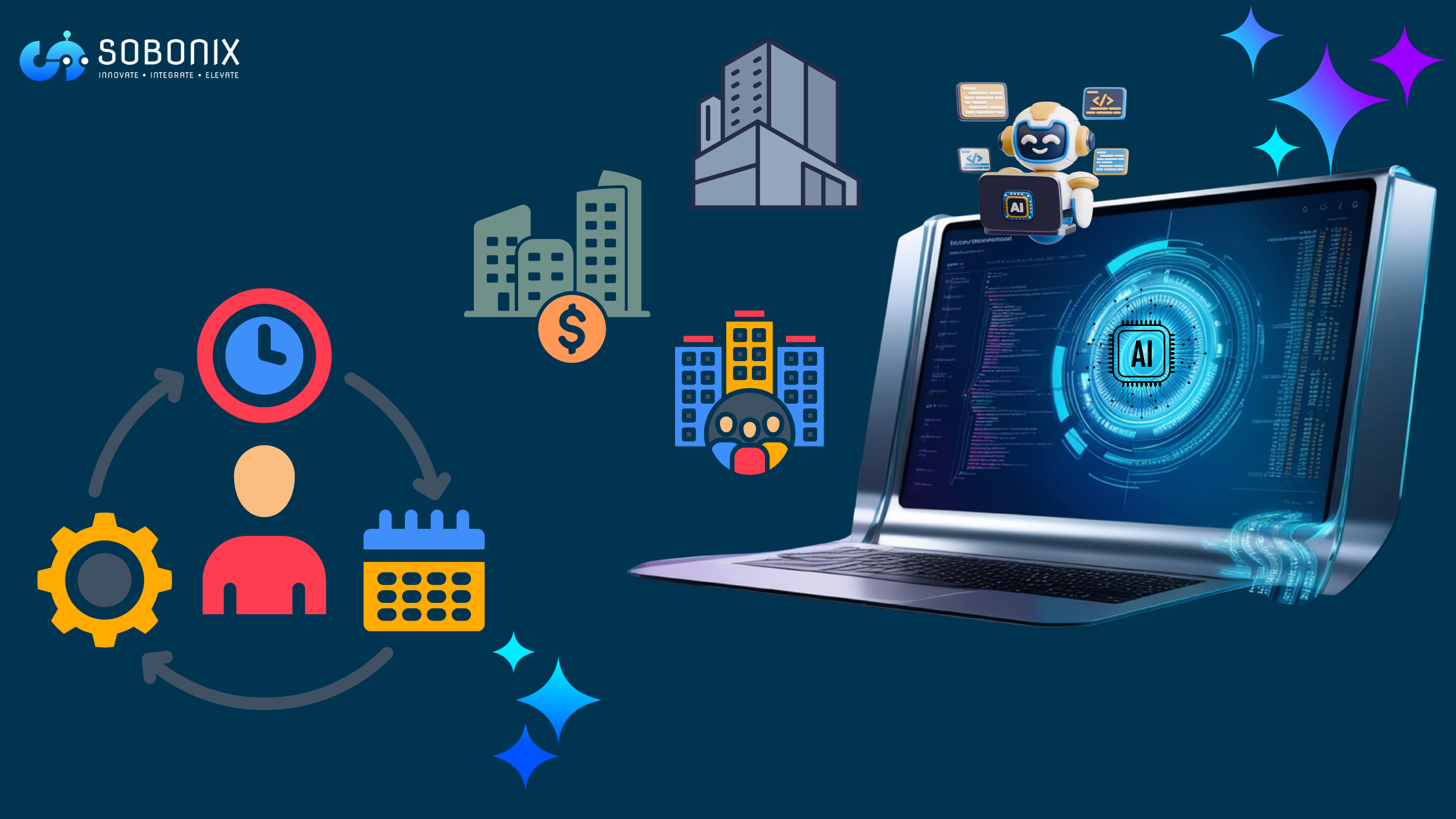
In 2026, enterprises are no longer asking whether to adopt AI—they are asking how fast they can scale it. AI-powered automation for enterprises has evolved from a competitive advantage to a strategic necessity. Organizations across finance, healthcare, retail, SaaS, and manufacturing are integrating enterprise AI automation solutions to streamline workflows, reduce operational costs, and unlock data-driven decision-making.
Traditional automation focused on rule-based systems and robotic process automation (RPA). While effective for repetitive tasks, it lacked adaptability. Today, AI-powered automation combines machine learning, natural language processing, predictive analytics, and intelligent process automation to create systems that not only execute tasks but also learn, optimize, and make contextual decisions.
For enterprises seeking scalable transformation, partnering with an experienced AI development company ensures that automation strategies align with long-term growth objectives.
What Is AI-Powered Automation?
AI-powered automation refers to the integration of artificial intelligence technologies into business process automation frameworks. Unlike traditional automation, which follows predefined rules, AI-enabled systems can analyze data patterns, predict outcomes, and continuously improve performance.

Key components include:
- Machine Learning (ML): Enables systems to learn from historical data.
- Natural Language Processing (NLP): Allows automation of text-heavy workflows such as emails, contracts, and support tickets.
- Computer Vision: Processes images and documents automatically.
- Predictive Analytics: Forecasts trends and operational needs.
- Intelligent Process Automation (IPA): Combines RPA with AI for advanced automation.
This approach transforms static workflows into adaptive, intelligent ecosystems capable of operating at enterprise scale.
Key Benefits of AI-Powered Automation for Enterprises
Operational Efficiency at Scale
Enterprise environments often include complex workflows across departments. AI-powered automation eliminates repetitive manual processes such as data entry, invoice processing, report generation, and ticket routing. By automating these tasks, organizations reduce human error and accelerate operational throughput.
For example, AI-driven document processing can reduce manual review time by up to 60%, improving productivity while maintaining accuracy.
Cost Optimization and Resource Allocation
AI automation services reduce labor-intensive processes and optimize resource distribution. Instead of expanding teams to manage growth, enterprises can scale operations through intelligent systems.
Automation also reduces hidden operational costs such as compliance errors, delayed processing, and inefficient task handoffs. Over time, these efficiencies significantly improve margins.
Enhanced Decision-Making
AI-powered automation platforms generate real-time insights from structured and unstructured data. Executives gain predictive analytics dashboards that identify trends, risks, and opportunities before they impact business performance.
This shift from reactive to proactive decision-making creates measurable strategic advantages.
Improved Customer Experience
Enterprise AI automation solutions enhance customer engagement by enabling:
Intelligent chatbots and virtual assistants
prise AI automation solutions enhance customer engagement by enabling:
- Intelligent chatbots and virtual assistants
- Automated customer query resolution
- Personalized recommendations
- Predictive support escalation
Faster responses and tailored interactions increase customer satisfaction and retention rates.
Scalability and Business Agility
As organizations grow, manual systems become bottlenecks. AI-powered automation adapts to increasing data volumes, expanding user bases, and evolving market demands without significant infrastructure overhaul.
This ensures long-term scalability and digital resilience.
Measuring ROI of AI-Powered Automation
Enterprises must evaluate both quantitative and qualitative metrics when assessing automation ROI.
Quantitative ROI
- Reduction in operational costs
- Decrease in processing time
- Increase in workflow accuracy
- Revenue growth through improved customer engagement
Industry benchmarks show that enterprises implementing intelligent process automation can achieve ROI within 12–24 months, depending on scale and use case
Qualitative ROI
- Faster decision cycles
- Enhanced employee productivity
- Improved compliance management
- Stronger competitive positioning
When implemented strategically, AI-powered automation becomes a revenue enabler rather than just a cost-saving tool.
Real-World Use Cases of AI-Powered Automation
1. Finance and Accounting Automation
AI automates invoice processing, expense validation, fraud detection, and financial reporting. Predictive models identify anomalies and reduce financial risk.
2. Supply Chain Optimization
Machine learning models forecast demand, optimize inventory levels, and reduce supply chain disruptions. Automation ensures timely procurement and logistics coordination.
3. Human Resource Management
AI streamlines resume screening, onboarding documentation, payroll validation, and performance analytics, reducing administrative workload.
4. Customer Support and Service Automation
AI chatbots handle high-volume queries, while sentiment analysis identifies dissatisfied customers in real time for proactive intervention.
5. Compliance and Risk Management
AI-powered systems automatically scan documents, contracts, and transactions to ensure regulatory compliance and detect irregularities.
These examples illustrate how business process automation with AI drives enterprise-wide transformation.
Strategy for Implementing AI-Powered Automation
Successful implementation requires more than deploying AI tools. Enterprises must adopt a structured strategy.
Step 1: Identify High-Impact Use Cases
Begin with processes that are repetitive, data-heavy, and measurable. This ensures early wins and clear ROI tracking.
Step 2: Audit Existing Infrastructure
Evaluate system compatibility, API readiness, data quality, and security frameworks.
Step 3: Define KPIs and Success Metrics
Establish measurable goals such as cost reduction, response time improvement, or error rate reduction.
Step 4: Partner with an AI Development Company
An experienced AI development company provides technical expertise, scalable architecture design, and seamless system integration.
Step 5: Deploy, Monitor, and Optimize
Automation systems require continuous monitoring, retraining, and refinement to maintain performance and adapt to changing business conditions.
Challenges in Enterprise AI Automation
Despite its benefits, enterprises may face challenges such as:
- Data fragmentation across departments
- Resistance to change within teams
- Legacy system compatibility issues
- Governance and compliance complexities
Working with specialized AI automation services providers helps mitigate these risks through structured implementation and robust governance models.
Why Enterprises Partner with an AI Development Company
While internal teams may manage limited automation projects, enterprise-scale AI transformation requires cross-functional expertise in:
- Machine learning engineering
- Cloud infrastructure
- API integration
- Data governance
- Security compliance
An experienced AI development company delivers end-to-end enterprise AI automation solutions, from strategy and design to deployment and long-term optimization.
This ensures faster implementation, reduced technical risk, and measurable ROI.
Also Read : Why Your Business Needs an AI Development Company
Future Trends in AI-Powered Automation
Looking ahead, enterprise automation will evolve through:
- Autonomous decision systems
- Hyperautomation combining AI and RPA
- Generative AI integration in workflows
- Real-time predictive analytics
- Multimodal AI systems (text, voice, image processing)
Organizations that invest in AI-powered automation for enterprises today will gain sustainable competitive advantages in the coming years.
Final Thoughts
AI-powered automation is redefining how enterprises operate. At Sobonix, we help organizations integrate intelligent process automation, predictive analytics, and machine learning into their core workflows to unlock greater efficiency, agility, and scalable growth.
The key lies in strategic implementation. Sobonix works closely with businesses to define clear objectives, set measurable KPIs, and deploy tailored automation solutions that deliver strong ROI while future-proofing operations.
As digital ecosystems grow more complex, enterprise AI automation solutions are no longer optional — they are foundational to modern business success, and Sobonix ensures companies adopt them with clarity, confidence, and long-term impact.
FAQs
1.What is AI-powered automation for enterprises?
AI-powered automation for enterprises refers to the integration of artificial intelligence technologies such as machine learning, NLP, predictive analytics, and intelligent process automation into business workflows. Unlike traditional rule-based automation, AI systems can learn from data, make contextual decisions, and continuously improve performance.
2.How is AI-powered automation different from traditional RPA?
Traditional Robotic Process Automation (RPA) follows predefined rules to handle repetitive tasks. AI-powered automation, on the other hand, adds intelligence through machine learning and data analysis, enabling systems to adapt, predict outcomes, and optimize workflows beyond fixed rules.
3.What are the key benefits of enterprise AI automation solutions?
Key benefits include:
- Increased operational efficiency
- Reduced operational costs
- Improved workflow accuracy
- Enhanced decision-making through predictive insights
- Better customer experience
Scalable and agile business processes
4.How does AI-powered automation improve ROI for enterprises?
AI automation improves ROI by reducing manual labor costs, minimizing errors, accelerating processing times, and enhancing customer engagement. Many enterprises achieve measurable ROI within 12–24 months depending on implementation scale and use case complexity.
5.What industries benefit most from AI-powered automation?
Industries that benefit significantly include:
- Finance and accounting
- Healthcare
- Retail and eCommerce
- SaaS and technology
- Logistics and supply chain
- Manufacturing
However, AI-powered automation can be applied across nearly all enterprise sectors.
6.What are common use cases of AI-powered automation?
Common enterprise use cases include:
- Invoice and financial processing
- Fraud detection and risk management
- Supply chain demand forecasting
- HR resume screening and onboarding
- AI chatbots for customer support
- Compliance monitoring and document analysis
7.How do enterprises measure the success of AI automation initiatives?
Enterprises measure success through quantitative and qualitative KPIs such as:
- Cost reduction percentage
- Processing time improvements
- Error rate reduction
- Revenue growth
- Employee productivity
- Customer satisfaction metrics
8.What challenges can arise during AI automation implementation?
Common challenges include:
- Data silos across departments
- Legacy system compatibility
- Internal resistance to change
- Governance and compliance issues
- Security and data privacy concerns


