How AI Agents Review Code: The Future of Pull Requests
AI agents are transforming pull requests—auto-reviewing code, catching bugs early, and speeding up development with smarter, faster feedback.

Today’s software development teams are delivering code faster than ever. However, while the deployment cycles are speeding up, code review is one of the biggest time-consuming activities in the software development lifecycle. Developers are spending hours reviewing the code, finding logic issues, reviewing the quality of the code, reviewing the security aspects, and reviewing the maintainability aspects. This is where the AI agents for code review are changing the software development landscape.
In the year 2026, software development workflows with AI agents are no longer just passive tools, but are changing the landscape with autonomous AI agents analyzing, understanding, and reviewing the code in real time. While the earlier versions of AI agents were just reviewing the code for syntax, today’s AI agents are understanding the code, reviewing the code, understanding the vulnerabilities, reviewing the quality, and even reviewing the better ways of writing the code.
What Are AI Code Review Agents?
The AI code review agents are intelligent software agents that are constructed using large language models, static code analysis tools, and machine learning techniques. Unlike other code analysis tools and code linters, the AI code review agents are capable of interpreting the context of the code, analyzing the intent of the developer, and reviewing the quality of the code.

The AI code review agent is a contemporary intelligent agent that can:
- Understand code written in different programming languages like Python, JavaScript, Java, and TypeScript.
- Analyze the intent of the code in the pull request.
- Identify logical bugs and architectural issues.
- Make recommendations on performance optimization.
- Identify security issues in the code.
- Generate comments on the code in natural language.
Because these agents use context-aware reasoning, they behave more like a senior developer reviewing code rather than a rule-based automation tool.
How AI Agents Review Pull Requests
The workflow for the AI code review agent is as follows:
1. Pull Request Context Analysis
When the developer sends a pull request, the AI agent performs the following analysis on the code:
- Commit message analysis
- File analysis (diff view)
- Repository analysis
- Coding standard analysis (defined within the project)
- Dependency analysis (libraries used within the project)
This analysis gives the AI agent an idea of the intention behind the code. For instance, the agent will know if the code has changed the database or the UI. If the database has changed, the agent will not review the code for UI functionality.
2. Static Code Analysis with AI Reasoning
Most code analysis tools are only good for catching syntax errors, unused variables, and indentation issues. However, the AI agent takes the analysis much further. The agent performs the following analysis on the code:
- Complexity analysis (cyclomatic complexity, nested conditions)
- Readability analysis (maintainability, ease of understanding)
- Potential runtime analysis (error prediction)
- Performance analysis (bottlenecks prediction)
- Security analysis (injection vulnerabilities)
For example, if the developer has written an inefficient loop that could be replaced with a more efficient function, the AI agent not only identifies this but also provides the improved function.
3. Understanding Developer Intent
One of the strongest aspects of AI agents is their capacity to understand the intent of the developer. This allows them to not simply apply coding rules but understand what the developer is trying to accomplish.
Example:
For example, if the developer is writing code to filter user data, the AI agent can:
- Recognize edge cases
- Offer improved error handling
- Offer improved data structure choices
- Identify security vulnerabilities in the user data
This makes the AI code review process intelligent and far more beneficial than other code review tools.
4. Generating Automated Review Feedback
The AI agent then produces structured feedback in the pull request.
- The feedback provided includes:
- Code suggestions
- Performance optimization feedback
- Security feedback
- Code readability feedback
- Best practice feedback
The feedback is generated through natural language processing (NLP), and the developer can easily understand the feedback provided.
Benefits of AI Code Review Agents
AI-powered code review is not just about automation—it improves the overall quality of the software development lifecycle.
Faster Pull Request Reviews
Manual reviews often take hours or even days, especially in large development teams. AI agents can analyze pull requests within seconds, allowing developers to deploy features faster.
Improved Code Quality
AI agents maintain consistent review standards. Unlike human reviewers who may miss issues due to time pressure, AI agents detect bugs, security risks, and inefficiencies systematically.
Reduced Developer Workload
Developers spend a significant amount of time reviewing code written by others. AI agents reduce this burden, allowing engineers to focus on architecture, innovation, and feature development.
Enhanced Security
AI agents can detect common vulnerabilities such as:
- SQL injection risks
- Authentication flaws
- Insecure API usage
- Data validation errors
This ensures that security issues are identified early in the development process.
How AI Agents Integrate with Modern Development Workflows
The AI code review agents are also created in a way that they can be integrated smoothly into modern-day development platforms.
- The AI code review agents can be used in conjunction with:
- Git-based repositories like GitHub, GitLab, and Bitbucket
- Continuous Integration tools like Jenkins, GitHub Actions, and GitLab CI/CD
- Code quality tools and linters
- Container-based development
The AI code review agent will automatically scan the code and make suggestions by posting them in the review section of the code when a developer opens a pull request.
AI Agents vs Traditional Code Review Tools
Traditional tools such as linters and static analyzers rely on predefined rules. While they are useful, they lack context awareness.
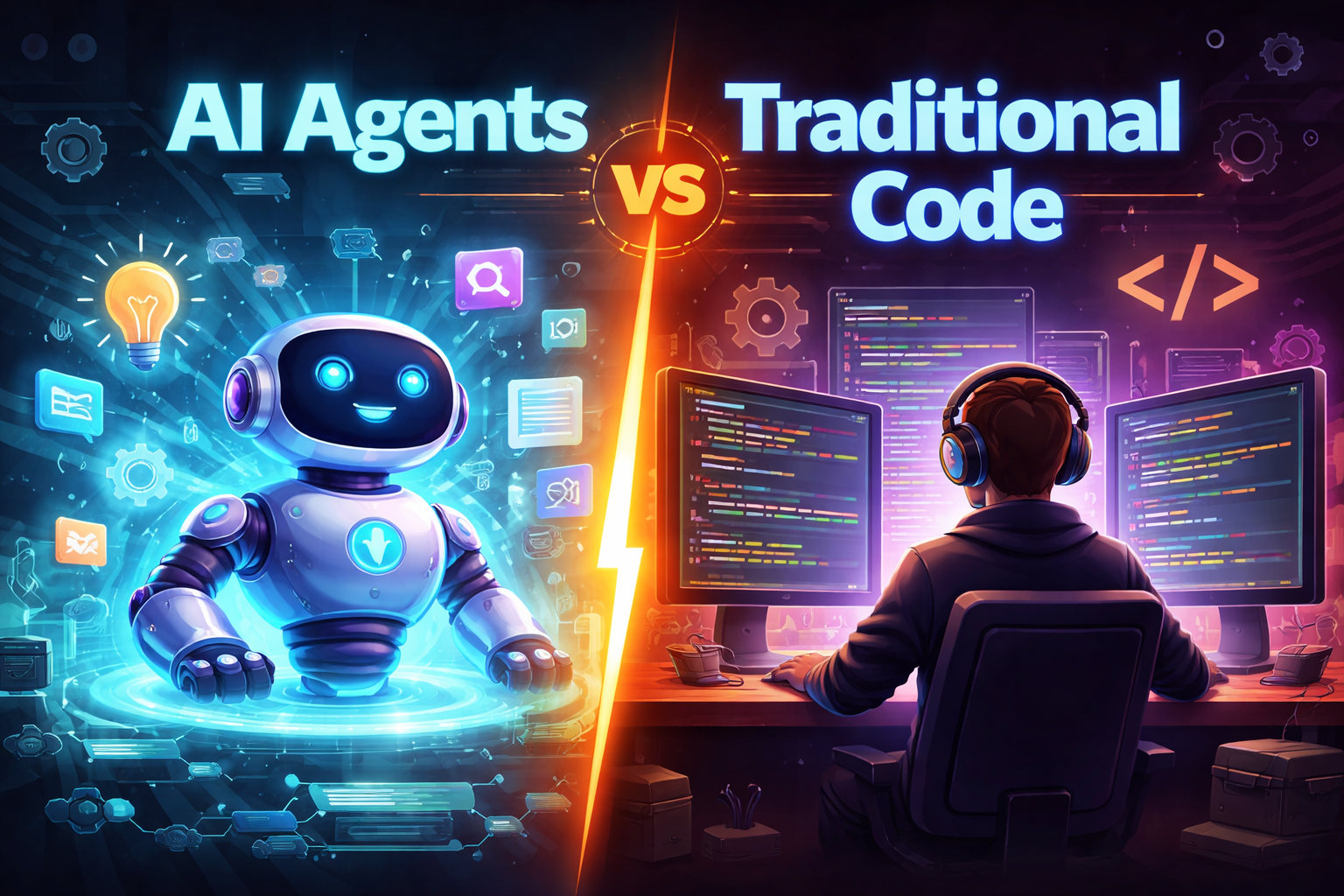
AI code review agents, on the other hand:
- Understand the purpose of the code
- Analyze logical correctness
- Provide meaningful explanations
- Suggest optimized implementations
- Adapt to project-specific coding styles
This makes AI agents significantly more powerful than traditional automated review tools.
Real-World Use Cases of AI Code Review
The adoption of AI code review agents is already underway for startups, SaaS businesses, and even large-scale software engineering teams.
SaaS Product Development
SaaS businesses employ AI agents to review backend API, database, and frontend components of the software. This enables the maintenance of high-quality code within large software development teams.
Enterprise Software Development
In the case of large enterprises, maintaining complex software applications can be a challenge, especially those with old, outdated code. The use of AI agents can help enterprises software developers refactor old, outdated, or insecure code without compromising the stability of the software.
DevOps and CI/CD Optimization
Using AI agents can help optimize the CI/CD pipeline by automatically validating pull requests, reducing the likelihood of failed deployments.
Open-Source Development
In the case of open-source software, the maintainer of the software can receive hundreds of pull requests from contributors, and the use of AI agents can help review the code to ensure only high-quality code is integrated into the software.
The Future of Pull Requests in 2026
The task of AI agents in code review is also changing rapidly. Instead of only reviewing the code, the task of AI agents in the near future will include:
- Generation of test cases
- Architecture improvements
- Performance issues detection before deployment
- Automatic refactoring of code
- Real-time collaboration with the developer
In the near future, the task of handling the pull requests will not only lie with the human reviewers. Instead, the AI agents will take the first step in intelligent code review, thus making the task of the human developer easy.
Challenges of AI-Driven Code Review
While AI agents offer significant advantages, they also come with certain challenges:
- Dependence on training data quality
- Risk of incorrect suggestions in complex logic
- Security concerns in proprietary codebases
- Need for continuous model optimization
- Difficulty understanding extremely domain-specific logic
However, as AI models become more advanced, these challenges are gradually being addressed through fine-tuning and better integration with development environments.
Why Businesses Should Adopt AI Code Review Agents
Business organizations that adopt AI-based code development processes have a competitive edge. Faster time to deployment, code quality, and reduced costs of developing code make AI agents a vital component in modern code development processes.
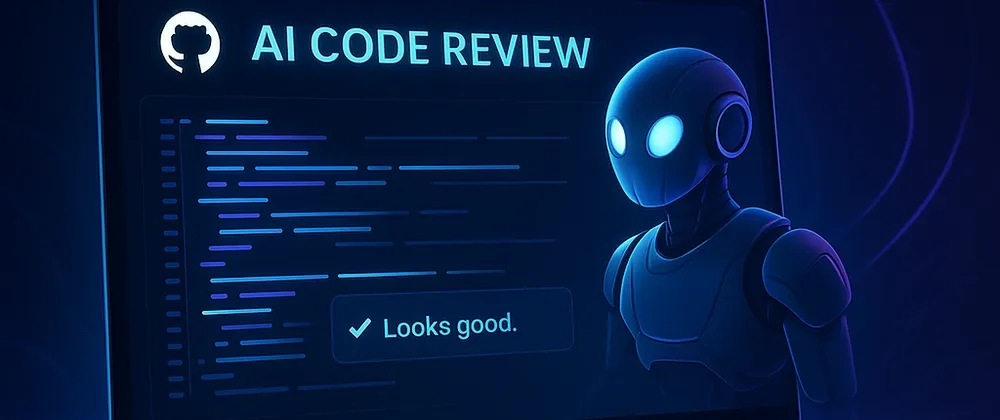
Business organizations that adopt AI-based code review processes have the following advantages:
- Faster time to market
- Reduced technical debt
- Improved developer productivity
- Improved code security
- Consistent coding standards
The advantages of using AI-based code review processes are significant to startup organizations and SaaS-based companies.
Final Thoughts
AI agents are changing the landscape for how code is reviewed and how pull requests are made. With the power of machine learning, natural language processing, and static code analysis, these intelligent agents are making software development faster, more efficient, and more secure.
In the world of 2026 and beyond, AI agents for code review will no longer simply be an efficiency tool, but an integral part of the software development process. Businesses looking to harness the power of AI agents today will not only improve the quality of their software, but also remain competitive in an ever-increasingly competitive world.
FAQs
What is an AI code review agent?
An AI code review agent is an intelligent system that analyzes code using machine learning, static analysis, and large language models to identify errors, suggest improvements, and automate pull request reviews.
Can AI agents replace human code reviewers?
AI agents cannot completely replace human developers, but they can automate repetitive review tasks. This allows human reviewers to focus on architecture, business logic, and complex problem-solving.
Which programming languages can AI code review tools support?
Most AI code review agents support popular languages such as Python, JavaScript, Java, TypeScript, C++, and Go.
Are AI code review agents secure for private repositories?
Yes, many AI tools offer enterprise-grade security and can run in private environments to ensure that proprietary code remains protected.
How do AI agents improve developer productivity?
AI agents reduce the time spent on manual code reviews, detect bugs early, and provide real-time suggestions, allowing developers to focus on writing high-quality code.