
Is Coding Going to Be Replaced by AI? Exploring the Future of Technology in 2026
Explore whether AI will replace coding in 2026, how developer roles are evolving, and why human expertise still matters in software development.
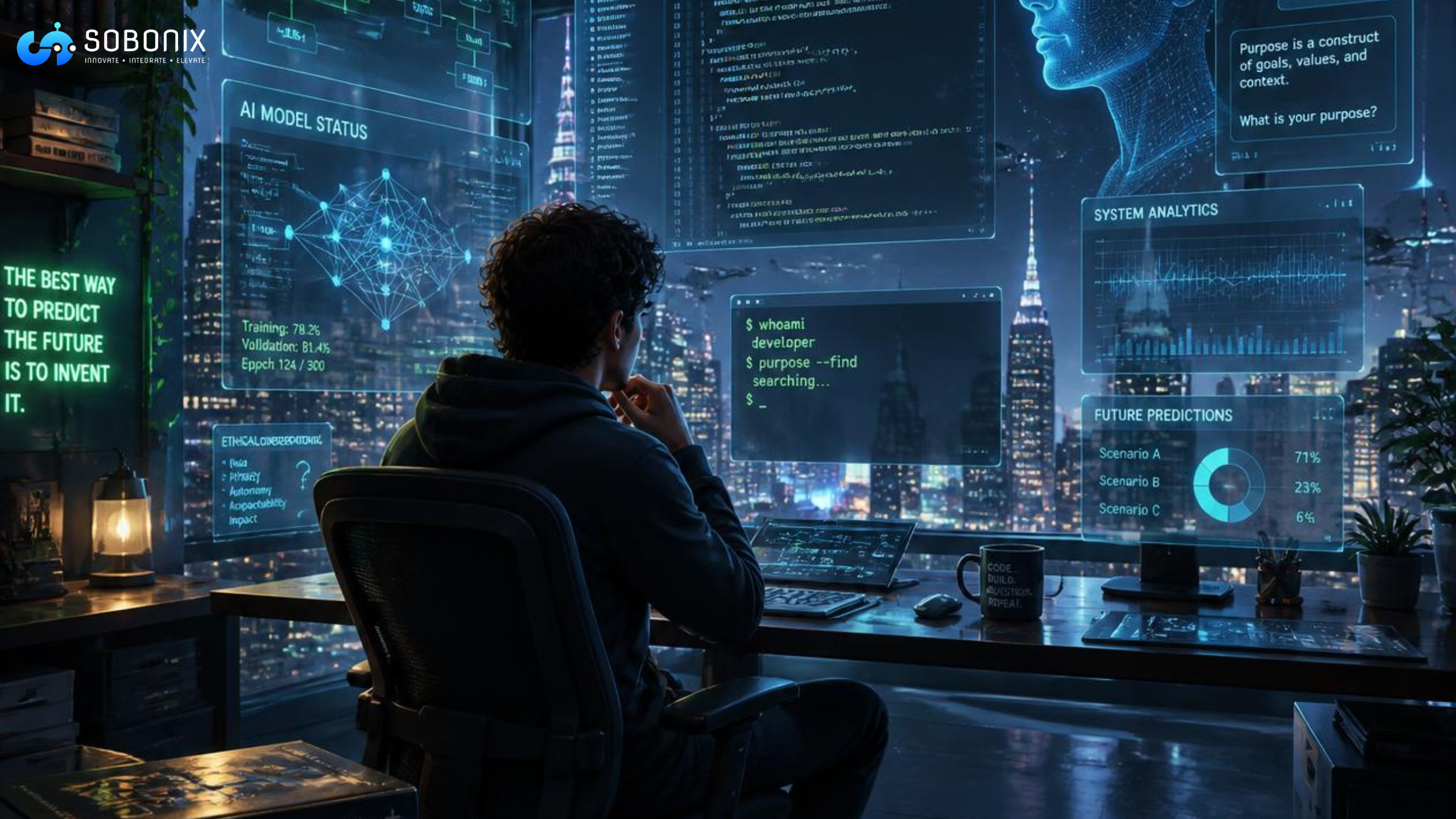
Artificial intelligence has transformed software development at a pace few industries anticipated. From generating code snippets and automating repetitive programming tasks to debugging applications and creating technical documentation, AI has become an integral part of the modern development lifecycle. Consequently, one question continues to dominate discussions among developers, CTOs, business leaders, and aspiring programmers alike: Is coding going to be replaced by AI?
The short answer is no—but the role of developers is evolving faster than ever before.
AI technology has revolutionized software development in ways many industries didn't expect. AI not only helps with generating code, but also with automating routine programming processes, debugging apps, and creating technical documentation. Thus, one of the most frequently asked questions in today's development world is this: will coding be replaced by AI?
The short answer is no. But the role of developers is becoming more dynamic than ever.
Today's AI can generate functions, explain new codebases, give suggestions regarding optimizations and even create basic applications based on your prompts. However, writing code is not all there is to software engineering. It also includes understanding business requirements, creating scalable architectures, securing applications, solving problems, making technical decisions, and many other areas where humans still excel.
It is already obvious from industry statistics. According to GitHub, developers who use coding AI assistance tools can complete certain tasks 55% faster, while, according to McKinsey, generative AI may bring $2.6 to $4.4 trillion per year to industries worldwide through productivity gains and knowledge work acceleration. Meanwhile, Gartner believes that AI will further reshape enterprise software delivery process, allowing developers to automate their routine engineering tasks and focus on innovating and solving more difficult problems.
We've witnessed this transformation firsthand while building AI-powered products, enterprise software, and intelligent automation solutions. Businesses are no longer asking whether they should adopt AI in software development—they're asking how to combine AI capabilities with experienced engineering teams to build smarter, faster, and more scalable digital products.
This article explores whether coding will truly be replaced by AI, what the future holds for software engineers, and how businesses can prepare for the next generation of technology.
Key Takeaways
Before diving deeper, here are the key insights every developer and business leader should know:
- AI is augmenting software development rather than replacing developers.
- Modern AI coding assistants can automate repetitive programming tasks, but they still require human supervision and technical judgment.
- Skills such as system architecture, product thinking, cybersecurity, and business analysis will become even more valuable in the AI era.
- The future belongs to developers who know how to collaborate effectively with AI rather than compete against it.
- Organizations investing in AI-powered development workflows are likely to deliver software faster while maintaining high quality and innovation.
Why This Question Matters More Than Ever in 2026
Just a few years ago, the role of AI in programming was restricted to autocomplete suggestions and syntax tips. Now, developers may ask AI to create APIs, refactor legacy code, develop database schemas, create unit tests, and explain hundreds of thousands of lines of code in seconds.
Obviously, many people are afraid of the future of coding jobs.
However, history proves otherwise.
Each breakthrough – be it high-level programming languages, IDEs, cloud computing or low-code development platforms – was initially perceived as an alternative to the software engineering profession. Eventually, all these innovations changed the way developers worked, offering new possibilities.
AI is no exception.
Rather than replacing software engineering, AI allows saving time spent on implementing the same code again and again, so developers have more time for innovation, architecture, UI/UX and solving difficult business problems.
And for companies, the transition to AI-based development tools is crucial.
In the era of fast product development, optimization of spending and quick response to ever-changing demands of customers, there is no choice other than developing a better way to solve engineering problems.
So now the question changes from "Is AI going to replace developers?" to "How should we use AI to enhance.
This observation captures the reality of today's technology landscape. The competitive advantage no longer lies in writing every line of code manually—it lies in knowing when to leverage AI, when to rely on human expertise, and how to combine both to deliver better software.

What AI Can Already Do Better Than Humans
There are many reasons why the ongoing discussion becomes bigger with each passing day. One of them is that Artificial Intelligence (AI) has become highly skilled in some aspects of software development. AI software of today can accomplish those things which used to take hours within just seconds.
Nowadays AI is able to:
- Generate boilerplate code for websites and apps.
- Translate natural language requirements into codes.
- Find syntax errors and suggest fixes before compiling.
- Write unit tests and documentations automatically.
- Refactor repetitive codes without losing functionality.
- Translate code from one language to another.
- Summarize large code bases to help developers understand a new project.
- Recommend performance optimizations based on best practices in coding.
These abilities are already making developers' life much easier, and they are able to spend less time on implementing some routine things and focus on innovation and problem-solving.
Yet, all these achievements are impressive, but they still do not cover all stages of software development process. It is vital to know why this code was written, what goals it helps to achieve and how it will change in future.
What AI Still Can't Replace (And Why Developers Remain Essential)
Although artificial intelligence has numerous strengths, it definitely has some limitations. Even though AI has the ability to find patterns and write code based on prior knowledge, it lacks reasoning, business intuition, and responsibility. Coding does not mean only writing the right code; sometimes, developers have to take into account user needs and make decisions which cannot be right or wrong.
It is for this very reason that the need for skilled software engineers will continue increasing regardless of the development of artificial intelligence.
Think about a health care platform working with confidential patient data or a fintech product dealing with many transactions. Even though AI will be able to write some parts of code, it will not be able to figure out the necessary regulations, business risks, or architecture decisions.
It is humans who make sure that the software is reliable, ethical, and meets the company's aims.
AI vs Human Developers: A Practical Comparison
The discussion isn't about choosing AI or humans. Instead, it's about understanding where each delivers the greatest value.
The comparison highlights an important reality: AI accelerates execution, whereas developers provide direction.
In other words, AI answers how something can be built, while engineers determine what should be built and why it matters.
How AI Is Transforming the Software Development Workflow
Rather than replacing engineers, AI is reshaping the entire software development workflow.
Previously, developers spent a significant portion of their time on repetitive tasks such as writing boilerplate code, debugging syntax errors, searching documentation, and preparing test cases. Today, many of these activities can be completed within minutes using modern AI coding tools.
This transformation is influencing every stage of software development.
Planning
AI assists in analysing project requirements, summarising documentation, and generating implementation strategies. However, product managers and architects still define priorities, technical feasibility, and business objectives.
Development
This is where AI currently delivers the greatest impact.
Developers use AI to:
- Generate reusable code
- Create APIs
- Build CRUD operations
- Suggest database schemas
- Refactor legacy applications
- Explain unfamiliar code
Consequently, development teams spend less time on repetitive implementation work and more time designing scalable solutions.
Testing
AI can automatically generate unit tests, identify potential vulnerabilities, and recommend performance improvements.
Nevertheless, human QA engineers remain essential for validating business logic, usability, and edge-case scenarios.
Deployment
Modern AI assists DevOps teams by generating deployment scripts, monitoring infrastructure, and identifying anomalies.
However, deployment strategies, rollback planning, and production governance continue to require human oversight.
Maintenance
Maintaining enterprise software often involves interpreting years of historical decisions.
AI can explain legacy code and recommend optimisations, but experienced engineers determine whether proposed changes align with long-term business goals.
The Rise of AI-Augmented Developers
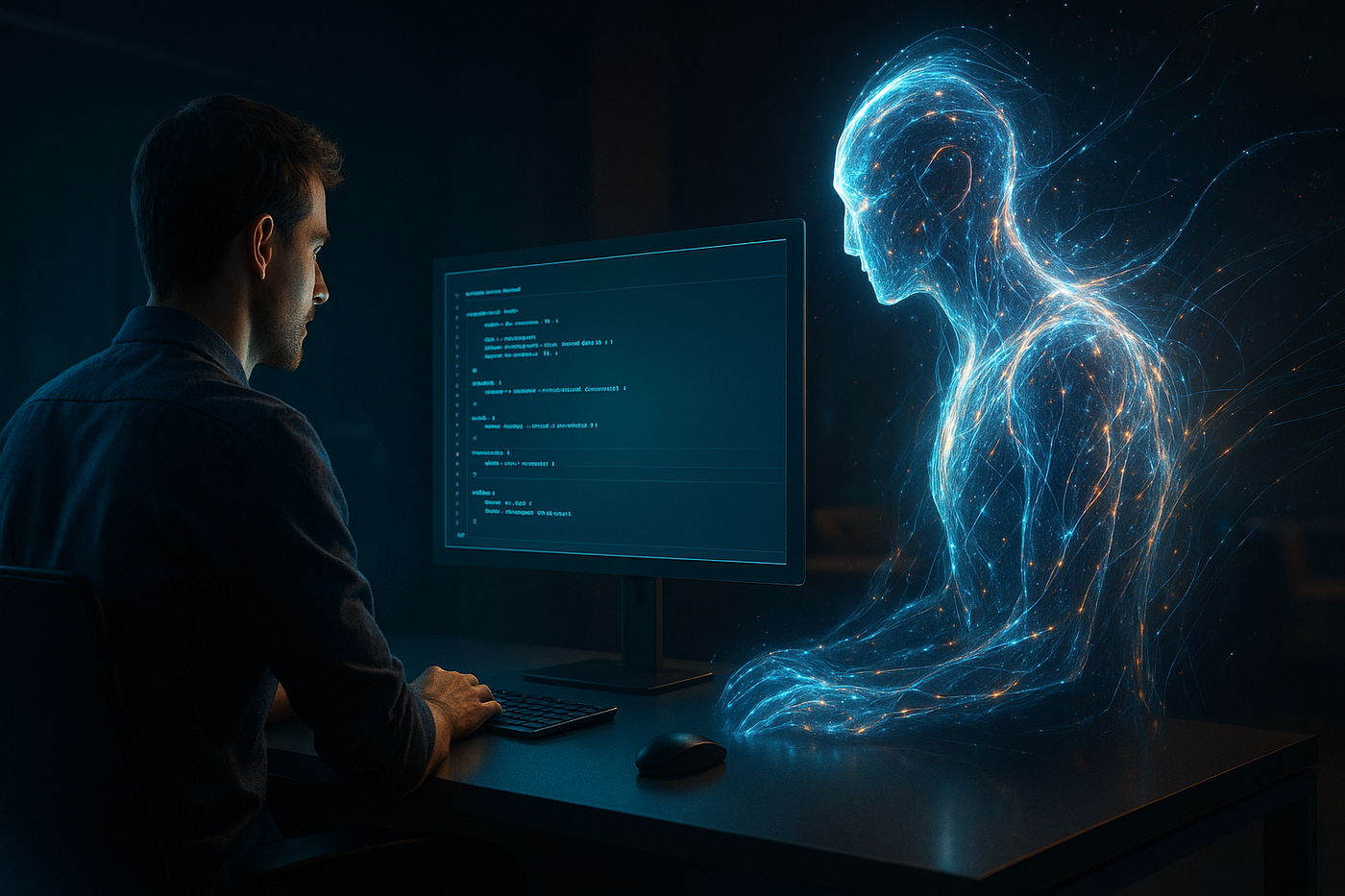
One of the most important trends to watch out for in 2026 is the emergence of the AI-augmented developer.
In place of writing code manually from scratch, developers start to work with artificial intelligence throughout the software development process.
The work of an AI-augmented developer consists not so much of implementation but rather of the following:
- System architecture
- Product innovation
- Technical leadership
- Security
- Customer experience
- Performance optimization
Thanks to this transformation, engineers will be able to add more business value, leaving repetitive coding to AI.
AI does not limit the number of possibilities; it changes what matters to organizations.
The Skills Developers Need in the AI Era
As artificial intelligence advances towards automating coding, technical experts must continue to adapt to stay ahead.
The developers that will prosper in the coming years will be the ones that have a balance between engineering knowledge and strategic abilities.
Such developers must:
System Architecture
Knowing about system design, APIs, microservices, and cloud architecture will be highly valuable.
AI Co-development
Developers that can prompt, validate, and refine AI-generated code will perform better than those who stick only to manual coding.
Cybersecurity
The security of software application is among the hardest tasks in software engineering.
It needs human judgement, constant monitoring and industry knowledge.
Knowledge of Business
Developers who understand the customer problems, business goals and market requirements better than programming languages are the ones that succeed more.
Communication
Software engineering is increasingly becoming a team effort.
Developers that can communicate with stakeholders, product teams, and management will be increasingly valuable.
Industries Where Human Developers Will Continue to Lead
Even though AI is going to handle a lot of development activities, there are certain industries which are dependent on deep industry knowledge, regulations, and human accountability.
These industries are:
Healthcare
Clinical software needs to abide by strict regulations for handling patient data with utmost precision.
Financial Services
The banking software needs to manage transactions, prevent frauds, and handle risk factors.
Government
Government software requires proper legislation, accessibility and also issues related to national security.
Manufacturing
The industrial software needs to have integration with robots and other operational technology.
SaaS Enterprise
The SaaS platforms require architecture design and optimization, which needs human intervention.
In these industries, AI helps to increase productivity, but at the same time, professional software engineers are essential.
What This Means for Businesses
For business leaders, the key question isn't whether AI will replace software developers.
Instead, it is:
How can AI help our engineering teams deliver better software faster?
Future-oriented companies are increasingly moving towards a hybrid development process where AI is used to execute repetitive implementation processes and engineers innovate and architect.
Here are some of the benefits of this approach:
- Quicker product development process
- Operational cost savings
- Higher quality of software
- Increased efficiency of engineers
- Enhanced customer experience
- Quick-to-market approach
With the help of this approach, companies can have the best of both worlds – automation and creativity.

Sobonix's Perspective: AI Is Redefining Software Development, Not Replacing It
AI is perceived by our company, Sobonix, as a tool of innovation rather than a replacement for engineering knowledge. Indeed, AI programming helpers and automation tools have immensely sped up software development processes, yet good digital products need strategic thinking, professional knowledge in the field, and appropriate system design.
For example, using AI, one can easily write thousands of lines of code within minutes. Yet, AI algorithms cannot think strategically about what kind of vision and perspective your company has and whether a certain architecture is capable of handling millions of users within the next five years. This requires professionals in both technology and business spheres.
It unites AI development services company and engineering together. Our experts apply AI in order to make development processes more efficient, faster, and better in terms of quality, while developers create secure and scalable software solutions.
What Will Software Development Look Like by 2030?
the age of AI-native software development engineering. Instead of acting as isolated code writing assistants, AI solutions will be woven into each stage of the software lifecycle.
Here are some of the trends that we can expect to see in the future of technology:
Self-Managing Development Pipelines
AI will increasingly take care of routine software development processes such as requirement analysis, code generation, automated testing, bug reporting, deployment monitoring, and documentation maintenance. Developers will move from writing each piece of code to overseeing AI-generated output.
Programming Using Natural Language
Instead of developing each of the required features, developers can increasingly write down business requirements in natural language and let AI generate an application logic, API, and UI elements. Of course, human review is still necessary for validation and verification purposes.
AI-Assisted Software Maintenance
Software maintenance takes up a considerable amount of engineering efforts. In the future, AI will proactively spot performance bottlenecks, suggest optimizations, identify security vulnerabilities, and generate code recommendations before users notice any of the problems.
Hyper-Personalised Applications
AI will enable software to adapt dynamically based on user behaviour, preferences, and contextual data. From healthcare and finance to e-commerce and education, applications will become increasingly intelligent and responsive.
Human-AI Collaboration as the New Standard
Perhaps the biggest shift won't be technological—it will be cultural. Software teams will increasingly view AI as a collaborative partner rather than a replacement. The most successful organisations will invest in upskilling developers to work effectively alongside AI instead of competing against it.
Developers of the Future Will Build More Than Code
As more and more routine programming tasks become automated by AI, the scope of work for software engineers will inevitably grow.
Engineers of the future will be expected to:
- Create scalable software architectures.
- Deploy AI in business software.
- Provide cybersecurity and regulatory compliance.
- Create ethical AI systems.
- Improve user experience and accessibility.
- Solve business challenges using technology.
In other words, writing code will only be a small part of the engineering profession of the future.
Therefore, technical professionals who always keep learning and adopt AI technologies will always be in great demand.
Will AI Replace Junior Developers?
A common question often asked is whether AI would render entry-level jobs in software engineering obsolete.
The truth is somewhat more complicated than that.
While AI may take care of many routine tasks that are usually handled by beginner programmers—writing template code, fixing minor issues, documenting programs, and testing code—this does not mean that junior programmers will no longer be required. This just means that they will learn things differently.
Rather than wasting months writing mundane code, future developers will learn about software architecture, cloud computing, system design, cybersecurity, and product management much sooner.
Final Verdict: Is Coding Going to Be Replaced by AI?
So, is coding going to be replaced by AI?
This is clearly not the case.
Artificial Intelligence is indeed changing the software development field by improving developer efficiency, productivity, and speed. However, AI excels at automation of routine tasks, creation of documentation, bug detection, and speeding up software delivery. Still, software development goes far beyond coding.
It takes creativity, critical thinking, knowledge of business processes, security, collaboration, and strategy—things which artificial intelligence cannot entirely provide.
The future will not see AI taking the place of developers but developers who use AI being more efficient than their peers who do not utilize AI.
This implies a need for companies to invest not only in artificial intelligence tools but in qualified engineers as well.
FAQs
Is coding going to be replaced by AI in the future?
No. While AI can automate many repetitive programming tasks, it cannot replace the strategic thinking, creativity, and business understanding required to design and maintain complex software systems.
Can AI write production-ready code?
Yes, AI can generate production-ready code for many use cases. However, human developers are still needed to validate functionality, optimise performance, address security concerns, and ensure the code aligns with business requirements.
Which jobs in software development are most affected by AI?
Roles focused on repetitive coding tasks are experiencing the greatest transformation. However, positions involving software architecture, AI integration, cloud engineering, cybersecurity, DevOps, and solution design continue to grow in demand.
What skills should developers learn to stay relevant?
Developers should strengthen skills in system design, cloud computing, AI integration, cybersecurity, data engineering, software architecture, and communication. Learning to collaborate effectively with AI tools is also becoming increasingly important.
How does AI improve the software development workflow?
AI enhances the software development workflow by automating code generation, debugging, testing, documentation, and maintenance. This allows developers to focus on innovation, problem-solving, and delivering greater business value.
Will AI reduce the demand for software engineers?
AI is expected to change software engineering roles rather than eliminate them. Demand will continue for developers who can design complex systems, supervise AI-generated code, and solve business-specific challenges.


