Spec-Driven Development: The Future of AI-First Software Engineering
Spec-Driven Development is reshaping AI-first software engineering—enabling faster builds, precise requirements, and scalable, future-ready applications.

The landscape of software development is witnessing a significant shift as artificial intelligence is increasingly integrated into the process. As a result, traditional coding practices are gradually giving way to spec-driven development—a practice in which the entire software development process is driven by specifications. In fact, by 2026, many organizations using artificial intelligence-based software development practices are likely to move towards specification-centric architectures for faster deployment, better code quality, and scalability.
Spec-driven development is a paradigm shift in which traditional coding practices are replaced by defining the behavior, constraints, and architecture of the entire system before coding. When combined with artificial intelligence-based software engineering practices, it enables the entire software creation process to be automated and minimizes human error, delivering better scalability than ever before.
What Is Spec-Driven Development?
Spec-driven development is a software development methodology in which technical specifications serve as the primary source of information during the entire development process. In this approach, instead of relying heavily on coding and documentation, software development is done in a structured manner in which the requirements, behaviors, and workflows of the software, APIs, and performance parameters are described in a structured and machine-readable form.
Specifications can be in the following forms:
- Functional Requirements
- API Schemas (OpenAPI and GraphQL)
- System Architecture Models
- Data Structures and Validation Rules
- Performance Benchmarks and Constraints
The AI system uses these specifications and interprets them to generate code, conduct testing, and provide optimization suggestions. Thus, spec-driven development is a significant part of AI-first software development.
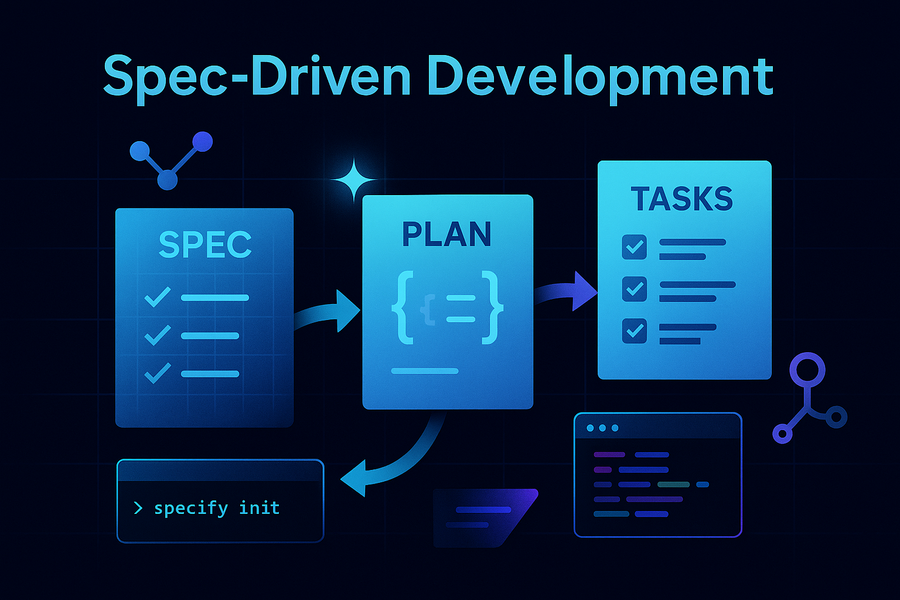
Why Spec-Driven Development Is Gaining Momentum in 2026
However, the complexity of modern software systems has grown significantly. Today, enterprises use various software systems such as microservices-based systems, real-time data systems, AI systems, and multi-platform systems. These complexities make it hard for traditional software development models to keep up.
With Spec-driven development, various challenges associated with software development, such as:
- Ambiguity in requirements
- Collaboration between developers and AI systems
- Consistency in code generation and system architecture
- Time-to-market for AI-based systems
Are being solved by various organizations that invest in AI development services by adopting specification-based development models.
How Spec-Driven Development Works in AI-First Software Engineering
Spec-driven development is a structured development process where AI tools are utilized throughout the development life cycle. Instead of writing code manually, detailed technical specifications are created, which AI tools use as input.
Step 1: Requirement Modeling
In spec-driven development, structured requirement modeling is utilized. Instead of writing requirements, detailed requirements are created in the following areas:
- User journeys
- Business logic rules
- Data flow architecture
- Edge cases and system constraints
AI tools then use these structured requirements and provide optimized workflow or architecture.
Step 2: Specification Creation
In spec-driven development, formal specifications are created in the following areas:
- API contracts
- Database schema
- Service interaction models
- Security requirements
These specifications are then used by AI tools for code generation.
Step 3: AI-Assisted Code Generation
In spec-driven development, AI tools generate code based on the specifications created by developers. This reduces development time and ensures code is generated based on requirements.
Step 4: Automated Testing and Validation
AI tools utilize these specifications and generate tests automatically. This ensures code is functionally accurate, optimized for performance, secure, and regression-tested.
Step 5: Continuous Optimization
In spec-driven development, applications are optimized continuously by updating specifications instead of writing code manually. This significantly reduces maintenance costs and increases application maintainability.
Key Benefits of Spec-Driven Development
1. Faster Development Cycles
Spec-driven development allows for the automation of coding, testing, and documentation. This leads to much faster development cycles, especially for organizations that have invested in AI-based software development.
2. Improved Code Quality and Consistency
As specifications become the primary source of truth, AI-based software development ensures that coding is done according to set standards. This improves code quality and ensures consistency.
3. Enhanced Scalability
Modern software is expected to handle large numbers of users, complex data, and integrations. Spec-driven software development ensures that scalability is built into software from the very start.
4. Reduced Development Costs
As repetitive tasks such as testing, documentation, and debugging are automated, organizations can cut costs on software development. For organizations that have invested in AI software development services, these benefits will be felt.
5. Better Collaboration Across Teams
Specifications create a structured communication layer for software development teams, including product managers, designers, and AI. This ensures seamless communication and collaboration.
Technologies Enabling Spec-Driven Development
Spec-driven development relies on modern tools and frameworks that support structured development workflows. Some of the key technologies include:
- OpenAPI and GraphQL specifications for defining APIs
- AI code generation tools such as large language models
- Automated testing frameworks powered by AI
- Cloud-native microservices architectures
- Infrastructure-as-Code (IaC) platforms
- Low-code and no-code development platforms
These technologies form the foundation of AI-driven software engineering, enabling developers to focus on system design rather than repetitive coding tasks.
Spec-Driven Development vs Traditional Software Development
Conventional software development is mostly based on manual coding, followed by testing and documentation. However, this methodology results in various issues.
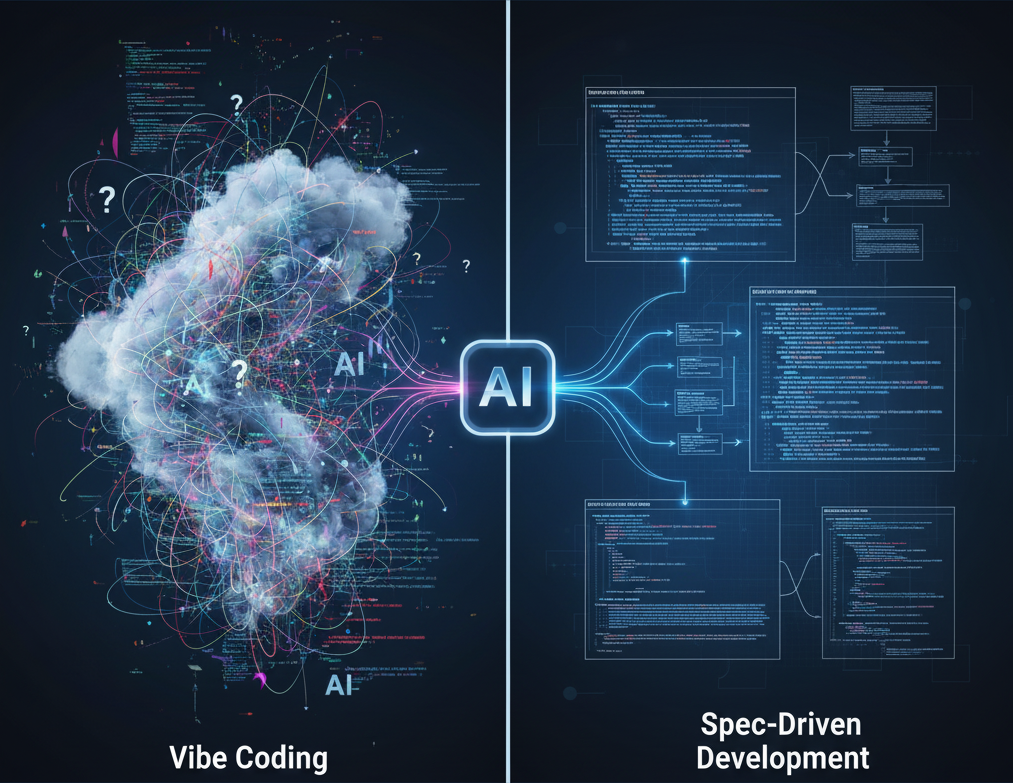
On the other hand, spec-driven development is based on:
- Structured specifications instead of manual coding
- Automation of repetitive tasks
- AI-based workflow instead of conventional development
- Optimization instead of static release
Thus, it is evident that spec-driven development is an integral part of the future of software development, especially for enterprises that develop AI-based applications.
Use Cases of Spec-Driven Development in 2026
Spec-driven development is already transforming multiple industries and software categories:
AI-Powered SaaS Platforms
SaaS companies use specification-centric workflows to build scalable platforms with automated testing and rapid feature deployment.
Enterprise Software Development
Large organizations rely on spec-driven methodologies to ensure consistency across complex systems such as CRMs, ERPs, and internal tools.
Fintech and Healthcare Applications
Industries that require strict compliance benefit from specification-based workflows that ensure security and regulatory alignment.
Custom Web Application Development
Businesses investing in AI development services can use spec-driven development to build scalable, secure, and high-performance web applications.
Why Spec-Driven Development Is the Future of AI-First Software Engineering
The future of software engineering is shifting toward automation, scalability, and intelligent systems. Spec-driven development aligns perfectly with these goals by allowing developers to focus on system architecture while AI handles repetitive implementation tasks.
In an AI-first software development environment, specifications become more valuable than code itself. They define how software behaves, how it scales, and how it integrates with other systems. As AI tools continue to evolve, spec-driven workflows will become the standard approach for building complex software solutions.
Final Thoughts
This is where the future of software engineering is headed: automation, scalability, and smart systems. Spec-driven development is a perfect fit for this future, allowing developers to concentrate on system architecture and leaving AI systems to handle tedious implementation details.
Specifications will be more important than code in an AI-first software development environment. Specifications will determine how software behaves, scales, and integrates with other systems. As AI systems continue to improve, this will be the way to develop complex software systems.
FAQs
What is spec-driven development in software engineering?
Spec-driven development is a methodology where structured technical specifications guide the entire development lifecycle, enabling AI systems to generate code, automate testing, and improve system scalability.
How does spec-driven development support AI-first software development?
Spec-driven development provides structured inputs that AI systems can interpret effectively. This allows AI tools to automate coding, testing, and optimization, making software development faster and more efficient.
Is spec-driven development suitable for startups?
Yes. Startups benefit from faster development cycles, reduced costs, and scalable architecture, making spec-driven development ideal for AI-driven products and SaaS platforms.
What industries benefit most from spec-driven development?
Industries such as fintech, healthcare, SaaS, e-commerce, and enterprise software benefit significantly from specification-centric development due to their need for scalability and compliance.
Why is spec-driven development considered the future of software engineering?
Because it reduces manual effort, improves code quality, enables automation, and supports AI-driven workflows, making it a more efficient and scalable approach than traditional development.