
AI-Assisted Software Engineering in 2026: The Rise of Human-Guided Coding Agents
Explore how AI-assisted software engineering in 2026 is evolving with human-guided coding agents that boost productivity, code quality, and faster delivery.
By 2026, the future of software development will involve the evolution into a point where AI coding agents have evolved beyond being mere tools for experimentation and have joined hands with humans to play an integral role in software engineering processes. In 2026, the AI coding agents can produce application modules, refactor existing code, write unit tests, and offer recommendations for architectural improvements. Data from industry usage reveals that well over 60%-70% of engineering teams within organizations are already relying on AI-assisted development tools for some of their tasks.
Despite this rapid growth in adoption, organizations are beginning to realize a significant drawback associated with AI coding agents – they don’t fully comprehend context, governance, and accountability. This explains the emergence of the HITL development approach within AI-driven engineering setups.
The solution provided by Sobonix offers structured AI development services in a way that incorporates automation while still preserving the integrity, security, and relevance of the process.
Understanding Human-in-the-Loop Development in AI Coding
Human-in-the-loop development involves using hybrid methods of engineering where AI algorithms produce outputs but still allow humans to have an active role during validation and further enhancement before deploying them to production environments. Regarding AI code generation systems, this implies that coders no longer write code manually but rather validate and guide AI-generated results.
The above approach significantly affects the role of developers as the latter no longer focus on writing code, but now concentrate on:
- Verifying correctness and efficiency of the generated code logic
- Checking whether the created solution matches the company's infrastructure
- Verifying that there is compliance with security requirements
- Offering contextual insights to AI that may not consider certain conditions
In contrast to AI-driven systems which rely heavily on machine learning, HITL creates a structure where humans can have the ultimate say in how processes develop and which decisions are made.
For enterprise organizations whose revenues and reputation depend on the quality of software produced, this becomes very important.
Why AI Coding Agents Cannot Operate Without Human Oversight
Despite all the advances in AI-based coding, they remain bound by the boundaries of statistical predictions and not by understanding. This creates some problems that demand human oversight.
Misalignment between System Contexts and Generated Code
Even though AI-based coders generate valid code from a syntactic point of view, sometimes it conflicts with the system as a whole. The code generated by an AI agent may work perfectly fine for improving speed while ignoring the constraints set by the transactional integrity principle of the architecture.
Security Risks and Compliance Problems
One of the most important aspects of development for corporate clients is security. There may be certain risks associated with generating insecure code in terms of authentication flows, encryption algorithms, and data processing procedures. Non-compliance with standards may cause legal repercussions.
Code Generalization
The algorithms used in AI-based coding agents are trained on general examples. Therefore, the solutions offered by them do not necessarily apply to the problem at hand.
Absence of Business Acumen
AI-based coding is not aware of the company's goals in terms of financial gain, user experience, and scalability requirements.
Therefore, there are some reasons why HITL software development is not optional.
Core Architecture of Human-in-the-Loop AI Development Systems
It should be noted that a mature AI-assisted development (HITL) system is not a standalone tool but an ecosystem comprising several layers. At Sobonix, we implement such systems as a part of our custom web application development service. The layers of an HITL ecosystem are described below.
Layer of AI Coding Agents
The functionality of AI coding agents is implemented at this layer. These agents can generate boilerplate code, offer function names, help with debugging, and perform other repetitive tasks. This layer greatly decreases development time but is completely non-intrusive.
Layer of Human Validation Agents
At this layer, developers verify generated code pieces for their correctness, efficiency, and compliance with software architecture. This layer serves as a quality gate for all incoming code pieces before their integration into repositories and deployment.
Layer of Feedback Agents
Every adjustment performed by a human developer is registered and used to train the AI agents. This feedback mechanism allows improving AI coding agents' performance progressively.
Layer of Governance Agents
These agents ensure that all modifications are performed within the scope of engineering standards and comply with security measures and other regulations.
Strategic Benefits of Human-in-the-Loop Development
When implemented correctly, HITL development delivers significant advantages that go beyond simple productivity gains.
Higher Engineering Velocity Without Loss of Quality
HITL implementation not only yields numerous benefits but also exceeds mere increases in efficiency.
More Rapid Development Cycles and No Stability Risks
AI completes tedious coding processes, leaving more time for humans to conduct validation and define architecture. In doing so, development speed is increased without compromising the stability of the product.
Minimized Technical Debt
If no humans supervise the process of AI coding, it may result in a lack of coherent coding structure and technical debt. However, HITL allows you to ensure high-quality code through proper supervision.
Better Security Profile
Human validation of generated code makes vulnerabilities less likely to make their way into the final product. This is especially relevant when working in sectors like fintech, healthcare, or SaaS development.
Increased Engineer Productivity
Instead of mundane coding tasks, developers become engaged in high-level coding activities such as system design or optimization of AI code generation.
Software Development at Scale
Engineering teams do not need to grow at the same rate as the project scope due to automation of low-value activities by AI agents.
This is precisely what Sobonix applies to every AI engineering solution we develop.
Managing AI Coding Agents in Enterprise Environments
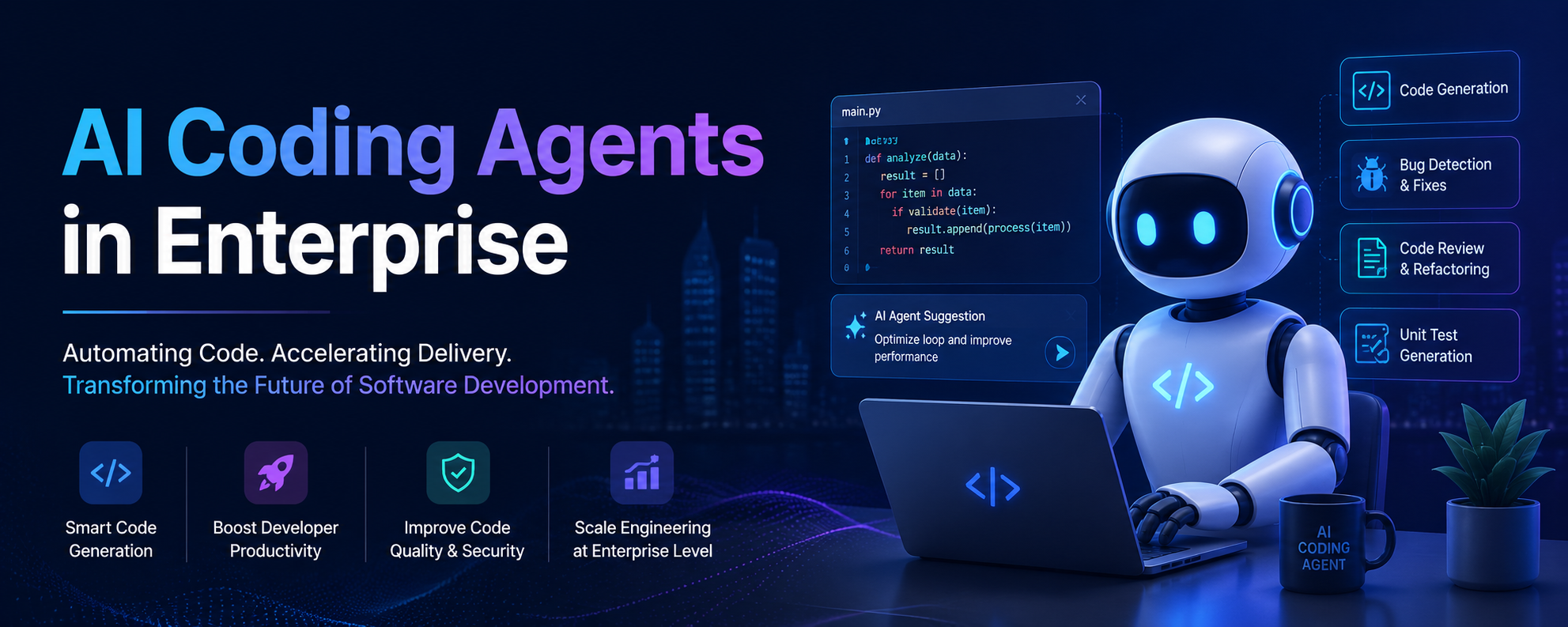
Disciplined use of AI coding agents is essential, not sporadic use.
Prompt Engineering Standards for Best Practice
Best practice in prompts guarantees that the generated code is both relevant and secure according to company guidelines.
Integrate with Version Control Systems
All the code generated by AI needs to be checked by software version control systems such as Git.
Required Code Review Processes
AI-written code needs to go through peer code review processes prior to implementation.
Automation of Testing Procedures
The code written by AI needs to be subjected to unit, integration, and regression tests before release.
Monitoring and Optimization of AI-Assisted Code
Performance monitoring after deployment ensures stability of the AI-assisted application and continued alignment.
Such standards convert AI code generation into reliable engineering assistance.
Role of AI Development Solutions in HITL Systems
Today’s solutions for developing AI help significantly to establish human-in-the-loop processes on a large scale. The mentioned solutions comprise such instruments as AI-powered IDE extensions, intelligent debuggers, automation tests and API coding helpers.
Upon proper integration, they will enable organizations to achieve such goals as:
- Decrease coding efforts
- Boost development speeds
- Exercise tight governance and control
- Increase human-AI collaboration
Sobonix leverages these solutions to introduce AI to the enterprise without any disruptions.
Challenges Enterprises Face While Adopting AI-Assisted Development
Nevertheless, there are certain difficulties associated with implementing the technology. They include:
- Increased complexity of the workflow due to more levels of review
- Resistance to implementing AI from conventional developers
- Need to upskill developers to collaborate with AI systems
- The need for good governance mechanisms
Nevertheless, all these issues can be overcome using an adequate implementation process, effective engineering management, and cooperation with seasoned vendors of AI-based development solutions.
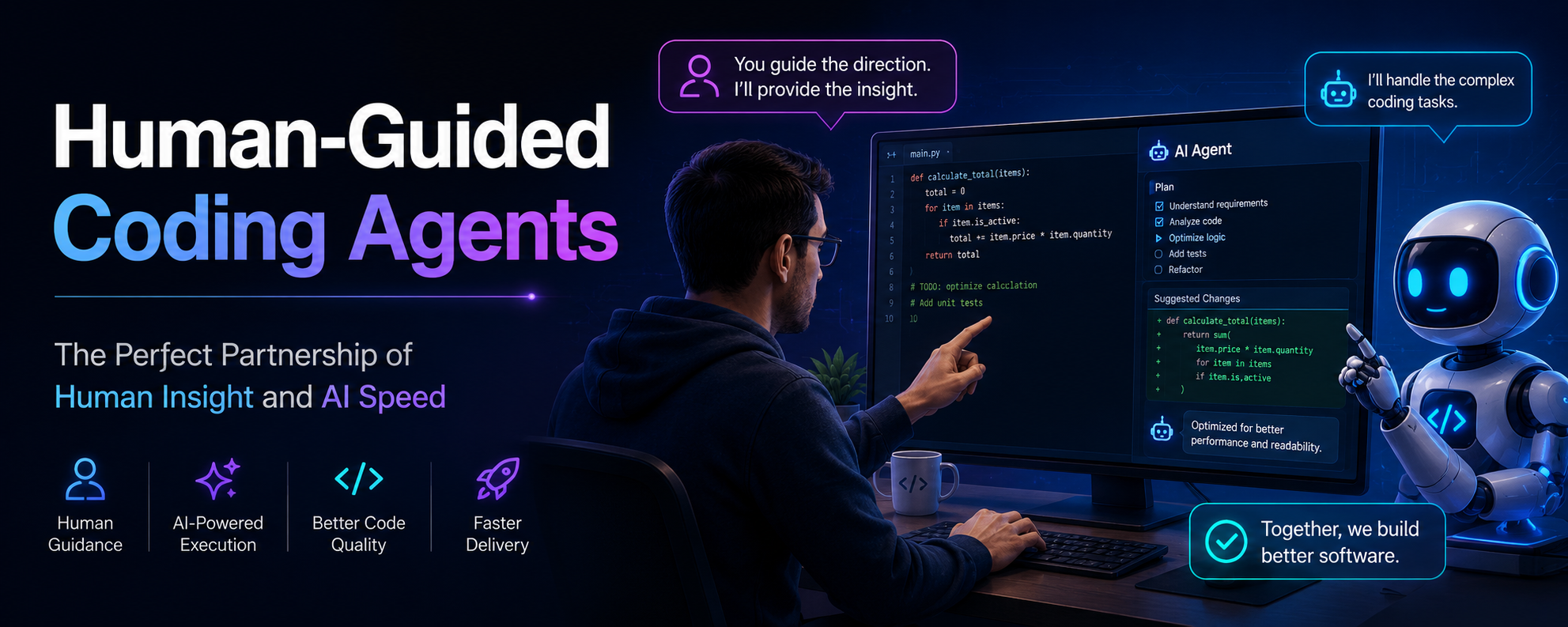
How Sobonix Builds Human-Centric AI Coding Systems
HITL system architecture is considered as a component of the larger engineering methodology adopted by Sobonix for integrating artificial intelligence into enterprise software development, while keeping human intervention in the loop.
The following steps can be taken under our approach:
- AI-enabled software development pipelines
- Governance frameworks in CI/CD pipelines
- Seamless integration with enterprise systems
- Scalable system architectures for continuous learning of AI algorithms
Through our services of custom web application development and AI engineering, organizations can benefit from improved development times, high-quality codes, and robust system stability.
Final Thoughts
The human-in-the-loop model for AI-enabled software engineering development is the most practical and sustainable way forward. This guarantees that the AI-powered software engineers act as accelerators of coding rather than substitutes, integrating the best of machine efficiency and human ingenuity.
With continuous integration of AI development solutions, the role of software engineers will shift from manual coding to a stronger focus on supervision, architecture, and governance. Through proper execution and guidance by a custom software solutions development company, businesses can achieve faster software development, improved security, and successful engineering outcomes.
FAQs
What is human-in-the-loop development in AI coding?
It is a software development approach where AI generates code, but human developers review, validate, and approve outputs before deployment to ensure quality and security.
Why is human oversight necessary for AI coding agents?
Because AI lacks full understanding of business context, architecture dependencies, and security constraints, making human validation essential.
Does HITL reduce the speed of development?
No. While it adds review steps, overall development speed increases because AI handles repetitive tasks, significantly reducing manual effort.
Can AI coding agents work without humans?
Technically yes, but in enterprise environments it is unsafe due to risks in security, compliance, and architectural consistency.
How does Sobonix implement HITL systems?
Sobonix integrates AI coding tools with structured human review pipelines as part of its AI development solutions and custom web application development services, ensuring scalable and secure software delivery.


