
Explore the Latest Breakthroughs in Health AI That Could Change Medicine Forever
Discover the latest Health AI breakthroughs transforming medicine in the USA, from smarter diagnosis and personalized care to clinical innovation.
Artificial intelligence is transitioning from experimental research to one of the pillars of contemporary medicine. From processing medical imagery, predicting disease risks, accelerating drug discovery to assisting clinicians in their decision-making process. AI technology is changing the way healthcare organizations handle diagnosis, research, and patient care.
It's getting apparent how significant that transformation has been. According to the 2025 Stanford AI Index, the largest language models have demonstrated significant progress when working on clinical knowledge benchmarks, with OpenAI's o1 reaching 96% on MedQA. That was just one of the many accomplishments noted in that report that included the growing numbers of FDA-approved AI-enabled medical devices.
Nevertheless, the most fascinating part about AI's recent advances is no longer limited to the ability of AI algorithms to exceed human performance on various clinical knowledge tests. It is about how AI is now being integrated with medical imaging, multimodal data, clinical workflows, genomics, drug discovery, and AI in healthcare software.
Therefore, the question that healthcare organizations should now ask themselves has changed. Is it still relevant for them to think whether they could use artificial intelligence in their practice? No, it is much more important now to understand how AI could bring tangible value
Multimodal AI Is Bringing Different Types of Medical Data Together
Among the many achievements of artificial intelligence in the field of health, the emergence of multimodal artificial intelligence is one of the most significant.
Conventionally, artificial intelligence models in the healthcare industry have been built on a single modality.
An artificial intelligence algorithm for imaging could analyze X-rays or CT scans. Another algorithm might use data from lab tests or electronic health records.
With the introduction of multimodal AI, there is a shift to the following:
- Medical images
- Clinical notes
- Laboratory results
- Genomic information
- Patient history
- Physiological signals
- Medication records
This matters because real clinical decision-making rarely depends on one data source.
A physician may consider a patient's symptoms, previous diagnoses, imaging results, medications, and laboratory values simultaneously. Multimodal AI aims to replicate this broader information-processing capability while providing clinicians with an additional layer of computational support.
Recent research also indicates that multimodal approaches are becoming increasingly prominent in AI clinical research, suggesting a transition from narrow diagnostic systems toward more comprehensive clinical intelligence.

AI Is Becoming Better at Early Disease Detection
Early diagnosis might completely alter the treatment process, especially in illnesses in which the treatment process becomes harder with the progression of the illness.
There have been many examples of AI being used to detect early warning signs for diseases like cancer, cardiovascular diseases, and neurological illnesses.
One of those examples would be the utilization of AI to detect biological signals which cannot be distinguished through the traditional approach.
For instance, Galleri test by Grail uses AI to analyze molecular signals of a blood sample to find the signal indicating more than 50 different types of cancers. In August 2026, the U.S. FDA has planned an advisory review of the test because of the conflicting results in a major UK trial.
As you see, one can make such a claim: technological promise does not equal clinical adoption. AI-based screening tests must also go through rigorous testing processes to provide proof of their usefulness.
Therefore, the future of healthcare AI requires not only more advanced algorithms but also more clinical proof.
Medical Imaging AI Is Moving Deeper Into Clinical Workflows
Radiology is one of the prime examples where AI has been adopted in the field of healthcare.
AI algorithms can analyze medical images, detect abnormalities, rank cases for their urgency, and assist doctors with further details while interpreting the images.
The list of FDA’s AI-enabled medical devices shows how much AI has been integrated into medical devices. The FDA’s 2026 listing of AI-enabled devices includes many AI algorithms that deal with various medical fields such as radiology, cardiovascular technology, ultrasound, etc.
However, the next step will be more important than just detecting the abnormalities.
For example, an AI system may:
- Receive an imaging study.
- Analyze the image.
- Identify potentially urgent findings.
- Prioritize the case.
- Notify the appropriate clinical team.
- Generate structured findings for review.
This creates a workflow-oriented model in which AI does not simply produce a prediction but helps move information through the healthcare system.
AI Is Moving From Diagnosis Toward Risk Prediction
Another major shift is the growing emphasis on predictive healthcare AI.
Instead of asking only, “Does this patient have a condition?”, newer models increasingly attempt to answer questions such as:
- Who is at higher risk of developing a condition?
- Which patients are likely to deteriorate?
- Which individuals may require closer monitoring?
- What health event could occur next?
An analysis of over 8,500 registered AI clinical trials conducted in 2026 showed that prognostic AI was slightly ahead of diagnostic AI in the clinical trial pipeline.
This creates opportunities for a proactive approach to healthcare.
For instance, an intelligent healthcare platform can use information about patient history, wearable technologies, lab results, and other factors to detect risk factors and notify healthcare providers of any potential problems.
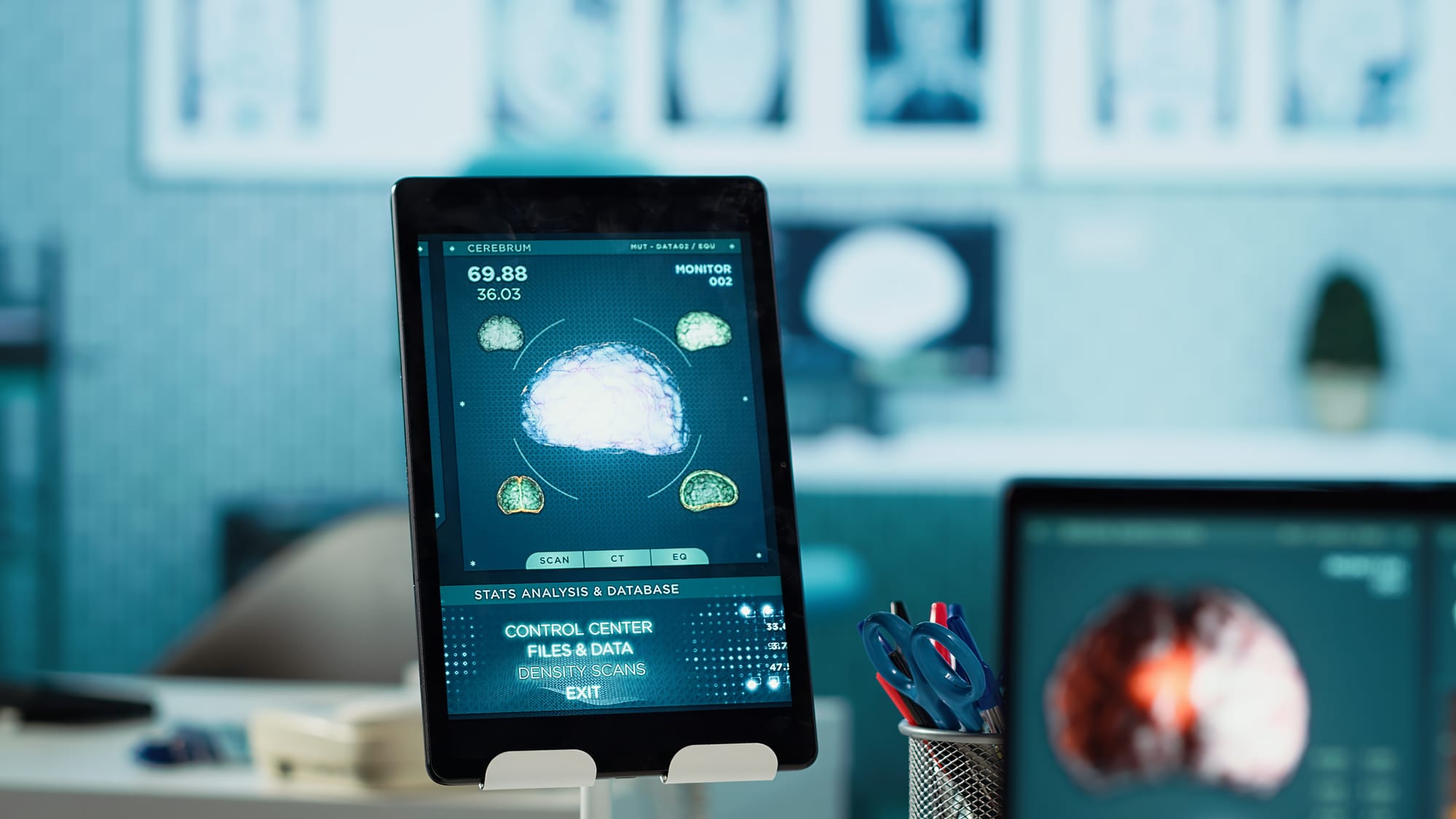
AI Is Changing Drug Discovery and Protein Research
Drug design has always been costly and time-intensive and quite iterative.
However, AI technology has now helped scientists to reduce some of the time in this process through structure analysis and interaction prediction.
Among the most significant advances made using AI was protein structure prediction.
According to the AI Index released by Stanford University, one of the major advances in the field of scientific discovery through AI was the development of advanced protein sequencing and structure prediction models such as AlphaFold 3 and ESM3.
It is not just in terms of academic research that the advance holds importance.
Protein modeling with the help of AI would allow scientists to have a deeper understanding of biological systems, identify drug targets, and find potential candidates.
It should be noted that AI would not be able to design a safe drug on its own.
AI-Powered Sleep and Wearable Analytics Are Expanding Preventive Care
The use of artificial intelligence in healthcare is also not confined to hospitals and labs.
Wearable devices, sleep trackers, smart sensors, and other devices are constantly providing biological signals that can be analyzed by AI in order to uncover patterns not easily recognizable through traditional methods.
In a 2026 study conducted on more than 10,000 sleep studies, AI was able to find five patient subgroups that have a different prognosis in the long run. These results were further corroborated in a separate group of more than 6,000 people.
This is important because traditional analysis of sleep studies relies only on a selected few signals. AI analysis, in turn, is capable of analyzing a wider range of biological signals at once.
Generative AI Is Entering Clinical Documentation
Every advancement in the application of AI technology in healthcare does not pertain to disease diagnoses.
The amount of paperwork involved in healthcare continues to be an issue for healthcare workers, and now the possibility of using generative AI for documentation and data management is on the rise.
Generative AI can be used by healthcare organizations to help with:
- Creating clinical notes
- Documenting procedures
- Communications with patients
- Summarizing records
- Finding relevant medical literature
- Administrative processes
- Extracting information
This is rather simple - if the time needed for paperwork is reduced while the data quality and privacy are kept intact, then doctors will have more time to communicate with their patients directly.
It is vital, however, to have a good set of measures in place in order to secure medical documents.
AI Healthcare Software Is Becoming More Interoperable
Another advancement which needs to be highlighted is not the specific AI itself, but the infrastructure around it.
AI will not generate any value for healthcare if it remains disconnected from the infrastructure where healthcare data resides.
Modern AI healthcare software development requires interoperability with the following:
- Electronic health records
- Laboratory information systems
- Hospital information systems
- Medical imaging solutions
- Wearable technology
- Pharmacy systems
- Healthcare APIs
- Patient portals
Standards such as HL7 FHIR are especially important as they enable more consistent exchange of structured information between healthcare applications.
This implies that for developers, AI healthcare software development has become an interdisciplinary engineering effort combining AI, APIs, cybersecurity, cloud infrastructure, data engineering, and healthcare interoperability.
The New Frontier: AI Agents in Healthcare
Another important evolution may come from the development of AI agents.
In contrast to traditional AI systems that operate based on individual requests, AI agents can be programmed to perform several functions simultaneously in order to reach an objective.
Healthcare applications can include the following:
- Following up on patients
- Summarizing patient files
- Preparing documents for doctors
- Handling the workflow process
- Monitoring specified parameters of patients
- Handling the referral process
But healthcare agents need much more control than generic business agents. This is where the architecture of healthcare software becomes very important.
What Healthcare Organizations Must Get Right
However, the enthusiasm about AI must not overshadow the potential dangers.
Since ai healthcare software development company providers deal with very sensitive data, it is important for them to be careful and take into account the following technical and governance aspects during the deployment of AI.
Data Privacy
The patient data should be encrypted and kept safe using appropriate access controls and data governance.
Model Validation
A model performing well in a laboratory will not necessarily perform the same way in other hospitals, other patient population, other devices, or demographic subgroups.
Explainability
Doctors should get enough information about the way the recommendation was generated by the AI model, especially when it concerns critical situations.
Human Oversight
It is important that AI works with skilled healthcare providers and does not eliminate the human factor from the decision-making process.
Regulatory Compliance
Depending on the application area, developers should also pay attention to various regulatory frameworks including HIPAA, GDPR, FDA requirements, EU AI Act, etc.
These issues were mentioned many times by the WHO. As the Director-General of WHO Dr Tedros Adhanom Ghebreyesus said in 2025, “As AI becomes more sophisticated and its health applications expand, so must our efforts to make them safe, effective, ethical.
What These Breakthroughs Mean for Healthcare Software Development
The real transformation is not about adding an AI chatbot to an existing healthcare application.
Instead, AI is becoming part of the underlying architecture of healthcare platforms.
A future-ready healthcare application may combine:
Patient data → Interoperability layer → AI models → Decision-support engine → Clinician interface → Audit and monitoring layer
This architecture allows AI outputs to be incorporated into existing workflows while retaining appropriate human oversight.
For organizations investing in healthcare technology, the opportunity is therefore much broader than implementing a single AI feature. It involves creating a secure ecosystem where data, software, AI models, clinicians, and patients can interact effectively.
Build Production-Ready Healthcare AI
Transform AI concepts into secure, scalable healthcare solutions designed around your workflows, integrations, and business goals.
Sobonix's Perspective: The Future Is Augmented Intelligence
At Sobonix, the most promising future for healthcare AI is not one where algorithms replace healthcare professionals. Instead, it is one where technology expands what clinicians and healthcare organizations can accomplish.
An AI system can process thousands of data points rapidly. A clinician brings medical judgment, empathy, contextual understanding, and accountability.
Combining these strengths can create a more capable healthcare environment.
The technology stack behind that vision may include machine learning models, large language models, computer vision, predictive analytics, cloud infrastructure, secure APIs, FHIR-based interoperability, data pipelines, and real-time monitoring.
The challenge is making these technologies work together safely.
Conclusion: AI Could Change Medicine, But Evidence Will Define Its Impact
The latest breakthroughs in health AI are undeniably significant. AI can now analyze complex medical images, model biological structures, identify hidden health risks, process multimodal information, and support clinical workflows at a scale that was difficult to achieve previously.
Yet the most important question is not whether AI can perform impressive technical tasks.
The most recent advancements in best healthcare ai software solutions are clearly important. Now AI is able to perform complex medical imaging analysis, biological modeling, identify health risks, process multimodal data and support clinical workflows in a way that was previously hard to accomplish.
But the most important question is not about whether AI can perform any amazing feats of technology.
The true question is whether that will result in better patient outcomes, reduction in burden on the system, greater accessibility and will do all of that safely.
That will define the next stage in development of medical AI.
As it has been stated by WHO European leadership: “The real test ahead is not whether AI progresses quickly, but whether humanity uses it wisely.”
For healthcare organizations, this is an incredible chance. But it is not only going to take advanced technologies to unlock it.
It will take solid data, interoperable systems, clinical validation, regulatory compliance, cybersecurity and effective collaboration of humans and artificial intelligence.
AI is set to change medicine. Yet, organizations that will have a truly meaningful impact will be the ones that build their AI on the foundations of clinical value, evidence, trust and people.
Frequently Asked Questions
What are the latest breakthroughs in health AI?
Major breakthroughs include multimodal AI, AI-assisted medical imaging, predictive disease modeling, AI-powered drug discovery, protein structure modeling, generative AI for clinical documentation, and continuous health monitoring using wearable data.
How is AI changing healthcare software development?
AI is becoming integrated into healthcare platforms for predictive analytics, clinical decision support, medical imaging, documentation, patient engagement, workflow automation, and remote monitoring. This is making healthcare software more intelligent and data-driven.
Can AI replace doctors in the future?
AI is more likely to augment healthcare professionals than completely replace them. Clinical judgment, physical examination, empathy, accountability, and complex decision-making still require human expertise. AI is most valuable when it supports clinicians with data processing and decision assistance.
What is multimodal AI in healthcare?
Multimodal AI processes multiple forms of healthcare data, such as medical images, clinical notes, laboratory results, genomic information, and physiological signals. Combining these inputs can provide a broader context for clinical analysis.
Why is AI important for early disease detection?
AI can identify subtle patterns across large datasets that may be difficult to detect manually. This can support earlier identification of potential risks and help clinicians prioritize patients for further evaluation.
Is AI healthcare software regulated?
Certain AI-enabled medical devices and clinical software may fall under regulatory frameworks depending on their intended use, functionality, and jurisdiction. In the United States, the FDA maintains a list of AI-enabled medical devices authorized for marketing.
What should businesses consider before developing AI healthcare software?
Organizations should evaluate the intended clinical use case, data quality, interoperability, cybersecurity, privacy, model validation, explainability, regulatory requirements, human oversight, and long-term monitoring before development begins.


