
When Should a SaaS Company Move From a Monolith to Microservices? A Practical Decision Framework
Discover when SaaS companies should move from monolithic architecture to microservices for better scalability, flexibility, and performance.

In case a SaaS product becomes larger, its software architecture may become more complicated to handle. Simple features may require updates and changes in many parts of an application. Developers will face delays in their release process, testing procedures, and the scalability of separate parts. In such a situation, a change from monolithic architecture to microservices looks like the right thing to do.
But it does not have to be a solution in all cases. The introduction of microservices requires a new infrastructure, communication, monitoring, and management. For some SaaS businesses, a monolith with well-thought-out architecture works better, being faster, cheaper, and easier to maintain.
It should not be done simply because others are doing it. It depends on business development, software complexity, developers' structure, and ability to perform operations. This guide will give you an answer to the question of when a SaaS business should choose microservices and why.
What Is the Difference Between Monolithic and Microservices Architecture?
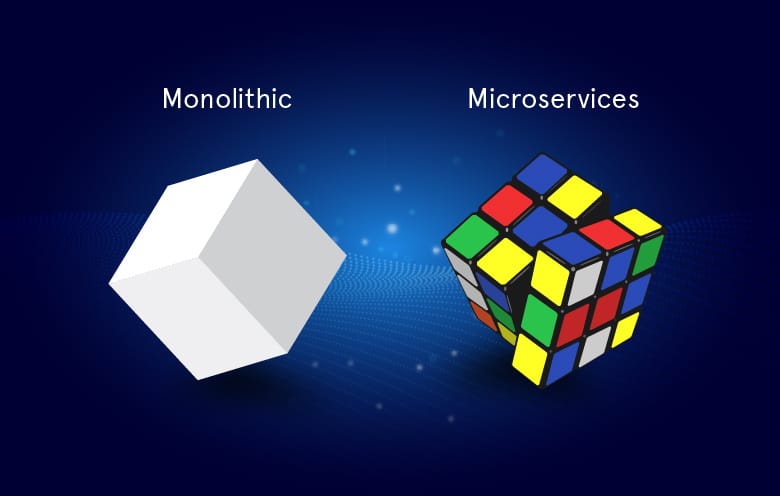
The monolithic architecture arranges the application as one package. The characteristics, business logic, and data access layer of the monolith tend to reside in one application source code. Even though there are different modules in the code, all these tend to be assembled, tested, and deployed together.
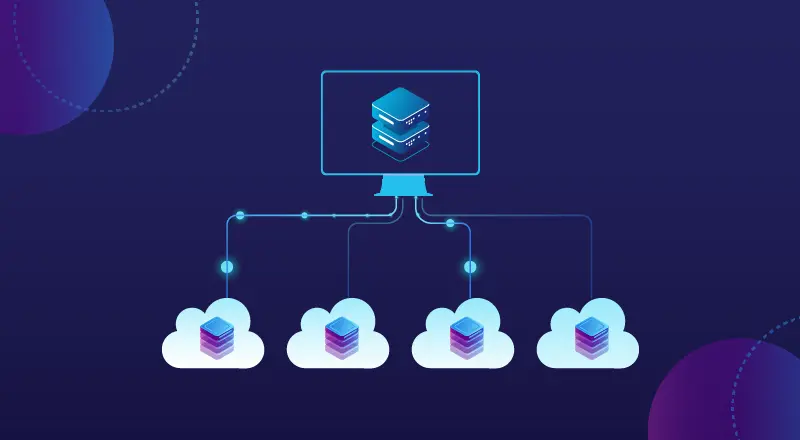
The microservices architecture development services splits the application into small pieces that can be deployed individually. Every service takes care of some business function, including user authentication, billing, notification, and reporting.
Neither architecture is universally better. A monolith can support a substantial SaaS product when its codebase is well organized. Microservices become more valuable when independent development, deployment, and scaling offer measurable advantages.
What Do Industry Statistics Say About Microservices Adoption?
Industry analysis reveals that the cloud-native approach becomes more and more widespread; nevertheless, it does not necessarily imply the necessity of using microservices architecture for every company.
For instance, the Cloud Native microservices Computing Foundation's Annual Cloud Native Survey for 2025 showed that 98% of the surveyed organizations had used cloud-native approach, and 82% of the surveyed organizations using containers used Kubernetes in production. In addition, 59% of the organizations implemented much or almost all of their development and deployment in the cloud-native way.
The mentioned statistics show the rising significance of modern infrastructure, automation, and application environment scalability. Nevertheless, using cloud-native technologies does not necessarily imply splitting the monolith into microservices.
For example, the Jakarta EE Developer Survey made by the Eclipse Foundation in 2024 received 1,409 responses from developers. Among the participants who developed Java solutions in the cloud, 46% implemented the hybrid approach, whereas only 31% used the microservices approach. The proportion of the hybrids increased to 41% in 2023. The conclusion is that SaaS companies should analyze their real development and operational needs rather than considering microservices the necessary step.
7 Signs Your SaaS Company May Be Ready for Microservices
A growing application does not need microservices simply because its codebase is getting larger. Look for recurring operational or development problems that the existing architecture struggles to address.
Development and Release Cycles Are Slowing Down
Within a tightly integrated monolith, a change made within one component may impact many other unrelated components. In case such updates do not affect the entire application, developers have to conduct thorough testing and manage releases anyway.
However, in case the development of services depends on some unrelated changes and the team often has to wait for others, then separating services by level can be considered. Microservices let teams develop and deploy individual business capabilities separately.
Individual Features Have Different Scaling Requirements
However, not all features of the SaaS have an equal amount of load. For instance, a report generation service may process heavy requests for data processing, whereas the authentication service will receive many light requests. Scaling a whole monolith app for the sake of scaling a single feature is going to be inefficient in terms of resource usage.
With microservices, a company can distribute resources among each separate service according to its load.
The Codebase Has Become Difficult to Maintain
As more features are added, the business logic may become interdependent within various components of the software.
In case there is an increasing frequency of duplication of logic, complex dependencies, or regressions resulting from other modifications, it would mean that the architecture requires refactoring.
Microservices should not be adopted to mask bad code structure. Using modular monoliths might help to solve most of these issues.
Multiple Development Teams Need Greater Independence
Multiple teams developing various features of one application might find it difficult to coordinate their efforts if there is only one codebase.
The microservice architecture can allow multiple teams to develop, test, and deploy a service independently.
This solution is effective if the teams are responsible for the corresponding business capabilities and know their service dependencies.
One Feature Creates Performance Bottlenecks
A resource-intensive activity could impair the functioning of an entire monolithic application if such activities fight for resources.
Examples of activities include data export, data analysis, or generating reports in the background, which use memory or CPU extensively. To avoid any impact on customer activities, the activities have to be split into different services.
One needs to analyze queries to the database, caching, and asynchronous processing before splitting up the application, as the issue might be elsewhere in the architecture.
Different Components Require Different Technology Choices
Some SaaS capabilities could gain from specific technologies. A data-processing service may require a runtime or framework different from that of the application itself, whereas an AI-enabled service might require particular infrastructure.
With microservices, we are able to use different technologies for different services without requiring all of them to use the same application stack.
The use of various technologies should be approached with care since it leads to higher maintenance costs as it increases the number of different programming languages, databases, and deployment environments supported.
The Company Requires Better Fault Isolation
An issue in a shared piece of code in a monolithic application could cause problems with more than one capability since they all share the same resources. Using microservices, the company will be able to isolate some of the faults through isolating the services themselves and properly managing the communication between them.
For example, a notification service being down does not mean that customers won't be able to log into their accounts.

A Practical Decision Framework: Should You Move to Microservices?
Before committing to a migration, evaluate the decision across five areas. The goal is to determine whether the benefits of independent services outweigh the additional engineering and operational costs.
A useful way to interpret the results is to look for repeated problems rather than isolated frustrations.
If your main challenges involve poor code organization, start by modularizing the monolith. If independent scaling, deployment bottlenecks, and team dependencies are affecting business performance, microservices may offer a stronger long-term solution.
Infrastructure readiness also deserves attention. The CNCF's 2025 survey identified cultural changes within development teams as the leading cloud-native adoption challenge, reported by 47% of respondents. This reinforces the importance of preparing people and processes alongside technical infrastructure.
When Should a SaaS Company Stay With a Monolith?
Microservices are not the right choice for every growing SaaS business. A monolithic architecture may remain appropriate when:
- The application has relatively few features and limited architectural complexity.
- A small development team can manage the codebase and deployment process efficiently.
- Most application components have similar scaling requirements.
- The business is still validating its product and frequently changing core features.
- The company lacks the infrastructure and engineering resources to manage distributed systems.
A modular monolith is often a practical middle ground. It keeps the application within one deployable unit while separating business capabilities into well-defined modules.
This structure can improve maintainability and create clearer boundaries. If the company eventually needs microservices, those modules can provide a starting point for extracting individual services.
Also Read : SaaS Modernization in 2026: How to Reduce Technical Debt Without Disrupting Existing Users
How to Migrate From a Monolith to Microservices Without Disrupting Operations
Once the decision is made, avoid rewriting the entire application at once. A gradual approach gives engineering teams more control over dependencies, testing, and production risks.
Step 1: Map the Existing Application
Determine the major capabilities of the application, shared components, databases, and communication paths. Get a sense of what features are tightly related and what can work independently.
Step 2: Choose the First Service to Extract
Choose a module that has a clearly identifiable business value and relatively few dependencies. Authentication integration, notifications, reporting, and background jobs are possible options depending on the application.
Do not just pick an easily separable service. It should solve some deployment, scaling, or maintenance problem.
Step 3: Determine Service Responsibilities and Data Ownership
Each microservice should have a defined responsibility and well-known interface. Figure out how services will communicate with each other and who owns which piece of business data.
Do not let several services write to the same database tables. Shared dependencies defeat the very idea of microservices.
Step 4: Set Up Communication and Monitoring
Pick a way of communication, either synchronous API calls or asynchronous message passing. Implement centralized logging, distributed tracing, service health checks, and performance monitoring.
They enable development teams to understand at which exact service a request failed when it goes through several services.
Step 5: Migrate Step by Step and Evaluate
Route selected functionality to the new service while keeping the existing application operational. Test performance, data consistency, deployment reliability, and failure handling before expanding the migration.
Track measurable outcomes such as release frequency, incident rates, infrastructure costs, and development lead time. Continue only when the new architecture delivers practical improvements.
Common Mistakes to Avoid During a Microservices Migration
Even an otherwise successful migration can result in unnecessary complications due to poor planning of architecture.
- Excessive partitioning of services: Having too many services creates an unnecessary cost of communicating and maintaining them. Begin with business boundaries.
- Neglecting database interdependencies: Services that depend extensively on database schema may stay closely coupled despite being separated into different services.
- Undervaluing infrastructure requirements: There is a need for extra resources for container orchestration, monitoring, networking, and distributed tracing.
- Not paying enough attention to failures: Latencies, unavailability of services, and partial failures become critical for a distributed system.
- Migration without goals: Migration should be aimed at solving business or engineering problems.
Conclusion
Moving from a monolith to microservices becomes a sensible choice when the existing architecture starts limiting development speed, scalability, team ownership, or system reliability. As software projects evolve, businesses may also look to technology partners such as Sobonix when evaluating how to adapt their systems to changing technical and operational needs.
For some companies, making improvements to a modular monolith would be the best approach. Some others might find it beneficial to extract certain features as separate services as the company grows.
Not always, more complex microservices architectures implies better architecture. The right architecture is the architecture that works for the current needs of the company and allows for future evolution of its software.
Frequently Asked Questions
When should a SaaS company switch from monolithic architecture to microservices?
A SaaS company should consider microservices when deployment dependencies, uneven scaling requirements, code complexity, or team coordination begin affecting product development and system performance. The transition should be based on measurable limitations rather than application size alone.
Can a monolithic application scale to millions of users?
Yes. A well-designed monolithic application can support substantial user traffic through horizontal scaling, caching, database optimization, load balancing, and infrastructure improvements. Microservices are not a requirement for achieving large-scale performance.
Are microservices more expensive than monolithic architecture?
They can be. Microservices often require additional infrastructure, monitoring, deployment automation, and engineering expertise. Their benefits may justify these costs when independent scaling and deployment improve operational efficiency.
What is a modular monolith, and is it a good alternative?
A modular monolith is a single deployable application organized into clearly separated business modules. It provides better code organization than a tightly coupled monolith without introducing the operational complexity of distributed services.
What is the biggest challenge when migrating to microservices?
Managing service boundaries, data ownership, and communication between services is among the biggest challenges. Poorly planned boundaries can create distributed dependencies that are more difficult to maintain than the original monolith.
Should a startup begin with microservices or a monolithic architecture?
Most early-stage startups benefit from starting with a monolith because it is generally faster and simpler to develop, test, and deploy. Microservices can be introduced later when specific business capabilities require independent scaling or release cycles.


